AI for Roads, Pavement and Infrastructure Inspection is an engineering and delivery service for ai for roads, pavement and infrastructure inspection for government and enterprise organisations across the uae and gcc. the engagement can cover assessment, solution architecture, software and infrastructure, integration, cybersecurity, data migration, testing, training and sla-backed support. deployment can be on-premise, private cloud, sovereign/regional cloud or hybrid according to data residency, security, performance and operational requirements. It covers discovery, architecture, integration…
A tender-ready ai for roads, pavement and infrastructure inspection design connects the business requirement to technical architecture, procurement evidence, operational ownership and measurable acceptance criteria.
What problem does this solve?
AI for Roads, Pavement and Infrastructure Inspection buyers often face A new tender/RFP requires a qualified technical delivery partner. That condition creates delivery risk when the requirement is treated as a product purchase instead of a decision involving ownership, data, integrations and acceptance evidence.
AI for Roads, Pavement and Infrastructure Inspection buyers often face The current platform is slow, fragmented, unsupported or difficult to integrate. That condition creates delivery risk when the requirement is treated as a product purchase instead of a decision involving ownership, data, integrations and acceptance evidence.
AI for Roads, Pavement and Infrastructure Inspection buyers often face The buyer needs local support, customization, Arabic/English workflows or UAE/GCC delivery capability. That condition creates delivery risk when the requirement is treated as a product purchase instead of a decision involving ownership, data, integrations and acceptance evidence.
AI for Roads, Pavement and Infrastructure Inspection buyers often face Security, data residency, audit, compliance or integration requirements prevent a simple off-the-shelf deployment. That condition creates delivery risk when the requirement is treated as a product purchase instead of a decision involving ownership, data, integrations and acceptance evidence.
How the solution works
Start ai for roads, pavement and infrastructure inspection with a discovery workshop that converts the tender language into actors, data flows, dependencies, risks, measurable acceptance criteria and a phased delivery plan.
Deliver discovery workshop and requirements matrix with named owners and evidence.
Deliver current-state assessment and gap analysis with named owners and evidence.
Deliver hld/lld and security architecture with named owners and evidence.
Deliver licensing/hardware sizing where required with named owners and evidence.
Deliver configuration, customization and development with named owners and evidence.
Deliver api, erp, gis, iot or third-party integration with named owners and evidence.
Keep the result supportable: document configuration, integration failure handling, rollback, monitoring, training, SLA boundaries and the handover evidence required by the buyer.
- 1Scope Translate the ai for roads, pavement and infrastructure inspection requirement into outcomes, exclusions, users, data classes, constraints and acceptance owners.
- 2Assess Inspect the current platform, interfaces, identity model, infrastructure, data quality and operational support position.
- 3Design Produce a high-level and low-level architecture for ai for roads, pavement and infrastructure inspection, including on-premise, cloud, hybrid, resilience and security decisions.
- 4Integrate Build supported API, ERP, GIS, IoT, identity or legacy connections with logging, retries, reconciliation and ownership for failure.
- 5Validate Run SIT, UAT, performance and security testing against representative data and the procurement acceptance criteria.
- 6Handover Deliver training, SOPs, administrator documentation, monitoring, SLA escalation and a controlled support transition.

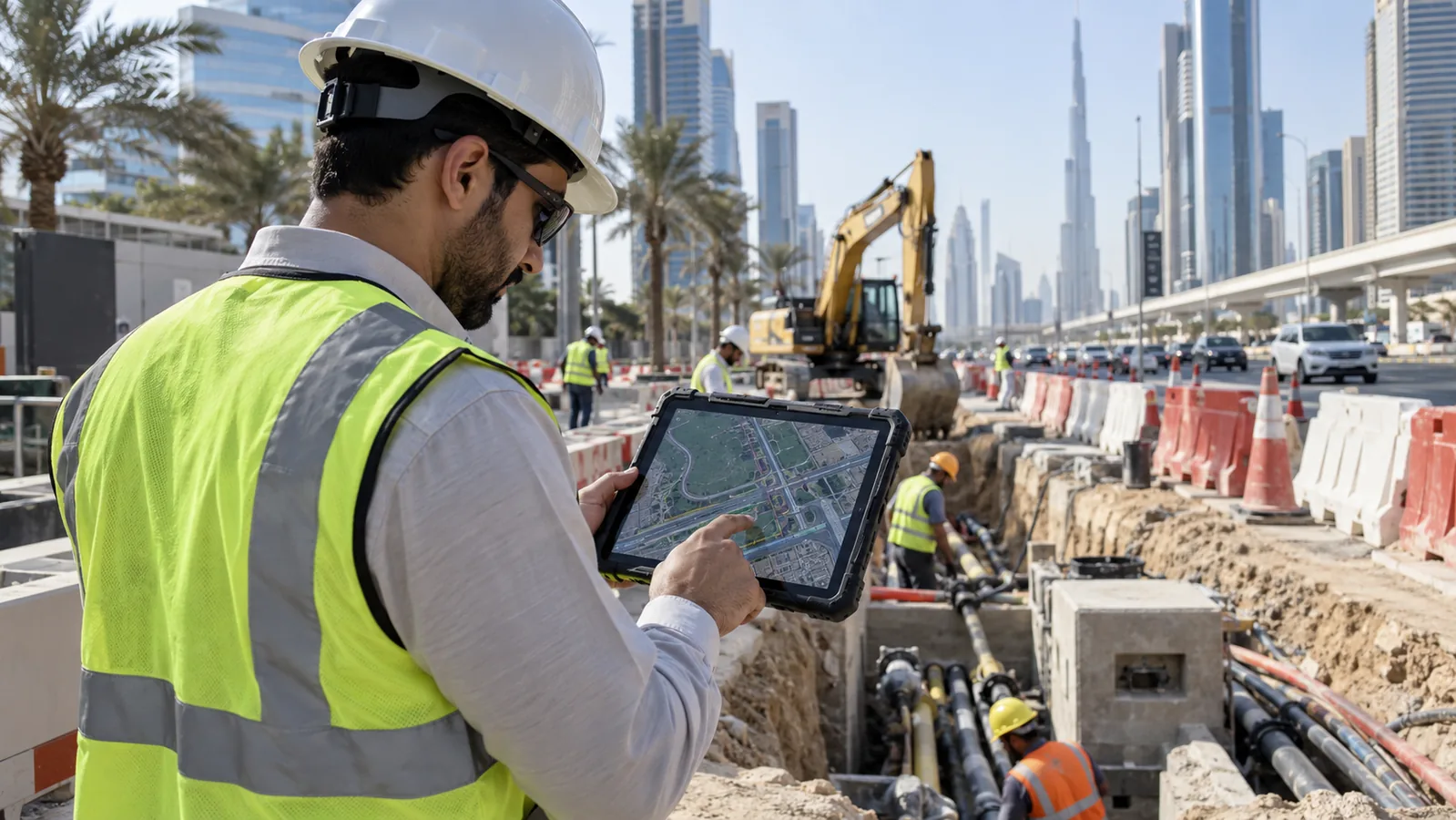
Reference architecture
The ai for roads, pavement and infrastructure inspection architecture is a chain of business outcome, identity, application/data, integration and recoverability decisions. The reference architecture in the master brief is: Users & channels -> identity/access -> application/platform -> integration/API layer -> operational data -> analytics/AI -> security/monitoring -> enterprise systems -> cloud/on-prem infrastructure -> backup/DR.
| Layer | What it contains |
|---|---|
| Users and channels | Government, enterprise, field, operational and administrative users who consume ai for roads, pavement and infrastructure inspection outcomes. |
| Identity and security | MFA, least privilege, privileged administration, audit, encryption and policy enforcement across the trust boundary. |
| Application and data | The ai for roads, pavement and infrastructure inspection service, operational records, source data, quality controls, analytics and retention requirements. |
| Integration and APIs | Where relevant, discuss integrations with Esri/ArcGIS, IBM, Oracle, SAP, Microsoft, Odoo, ServiceNow, cloud platforms, APIs, databases, identity systems, CCTV/VMS, RFID/RTLS, IoT, BIM and existing on-premise infrastructure. Only mention products that genuinely fit the solution. Error handling and reconciliation must be designed, not assumed. |
| Infrastructure and recovery | On-premise, private cloud, sovereign/regional cloud or hybrid infrastructure with backup, monitoring, DR and a tested recovery owner. |
Deployment options: Select on-premise, private cloud, sovereign/regional cloud or hybrid only after data residency, identity, performance, support and recovery constraints are documented.
Key capabilities
Integrations
AI for Roads, Pavement and Infrastructure Inspection should integrate only where the business flow requires it. The master brief identifies vendor, ERP, GIS, IoT, API, identity and legacy relationships as candidates; each must be justified in the final design.
| System | Integration point & data exchanged | Direction |
|---|---|---|
| Identity and access | Users, service accounts, roles, MFA, approvals and audit events | bi-directional |
| ERP / business systems | Master data, transactions, approvals, status and reconciliation evidence | bi-directional |
| GIS / IoT / operational systems | Assets, locations, events, telemetry and workflow actions where relevant | bi-directional |
| API, reporting and support | Interfaces, logs, dashboards, incidents, SLA evidence and change records | bi-directional |
Industry use cases
UAE & GCC considerations
For UAE and GCC delivery of ai for roads, pavement and infrastructure inspection, confirm data residency, administrator location, Arabic/English interfaces, local working calendars, government security controls, private connectivity and evidence retention before selecting a deployment. UAE and Saudi requirements may diverge for tax, hosting, identity, procurement and regulatory sign-off. Record each requirement as confirmed, customer-owned or still requiring legal/security review.
Implementation approach
- 1Scope Translate the ai for roads, pavement and infrastructure inspection requirement into outcomes, exclusions, users, data classes, constraints and acceptance owners.
- 2Assess Inspect the current platform, interfaces, identity model, infrastructure, data quality and operational support position.
- 3Design Produce a high-level and low-level architecture for ai for roads, pavement and infrastructure inspection, including on-premise, cloud, hybrid, resilience and security decisions.
- 4Integrate Build supported API, ERP, GIS, IoT, identity or legacy connections with logging, retries, reconciliation and ownership for failure.
- 5Validate Run SIT, UAT, performance and security testing against representative data and the procurement acceptance criteria.
- 6Handover Deliver training, SOPs, administrator documentation, monitoring, SLA escalation and a controlled support transition.
- 7Acceptance and support Complete the RFP/RFQ acceptance checklist, handover evidence, SLA, warranty, support escalation and improvement backlog.
Security & deployment
Secure ai for roads, pavement and infrastructure inspection through least privilege, MFA/PAM, encryption, audit logging, protected integration credentials, vulnerability and patch management, backup/DR, incident response and evidence retention. On-premise and private-cloud designs still require disciplined administration; cloud or hybrid designs require a clear shared-responsibility boundary and an explicit outbound data path.
Limitations & prerequisites
- A tender brief cannot prove compatibility, performance, certification or regulatory acceptance without the target architecture, release, data and contractual scope.
- Integration work may expose upstream data-quality and identity problems that a product installation does not solve.
- A pilot can demonstrate feasibility but does not replace SIT, UAT, performance, security, training and operational handover.
- Local support, Arabic documentation, residency and SLA commitments add delivery cost and ownership requirements; they must be priced and accepted explicitly.
Product purchase versus engineered AI for Roads, Pavement and Infrastructure Inspection delivery
The lower-risk choice depends on evidence, not on the shortest quotation.
| Decision point | Product-only purchase | Engineered delivery |
|---|---|---|
| Scope | Names a product and broad outcomes. | Defines users, data, integrations, risks and acceptance criteria. |
| Deployment | Assumes default hosting and security. | Tests on-premise, private, sovereign and hybrid constraints. |
| Handover | Leaves support and evidence unclear. | Includes training, documentation, SLA, monitoring and recovery ownership. |
FAQ
For AI for Roads, Pavement and Infrastructure Inspection, the answer depends on the current environment, data, integrations and acceptance criteria. Start with a discovery assessment, then document the supported architecture, test evidence, ownership and rollback path before committing to production delivery.
AI for Roads, Pavement and Infrastructure Inspection can be scoped for on-premise, private cloud, sovereign/regional cloud or hybrid deployment when the security and data-residency requirements support it. The proposal should state what is included, what the buyer must provide and how SIT, UAT, training and SLA support will be accepted.
For AI for Roads, Pavement and Infrastructure Inspection, the answer depends on the current environment, data, integrations and acceptance criteria. Start with a discovery assessment, then document the supported architecture, test evidence, ownership and rollback path before committing to production delivery.
AI for Roads, Pavement and Infrastructure Inspection can be scoped for on-premise, private cloud, sovereign/regional cloud or hybrid deployment when the security and data-residency requirements support it. The proposal should state what is included, what the buyer must provide and how SIT, UAT, training and SLA support will be accepted.
For AI for Roads, Pavement and Infrastructure Inspection, the answer depends on the current environment, data, integrations and acceptance criteria. Start with a discovery assessment, then document the supported architecture, test evidence, ownership and rollback path before committing to production delivery.
AI for Roads, Pavement and Infrastructure Inspection can be scoped for on-premise, private cloud, sovereign/regional cloud or hybrid deployment when the security and data-residency requirements support it. The proposal should state what is included, what the buyer must provide and how SIT, UAT, training and SLA support will be accepted.
For AI for Roads, Pavement and Infrastructure Inspection, the answer depends on the current environment, data, integrations and acceptance criteria. Start with a discovery assessment, then document the supported architecture, test evidence, ownership and rollback path before committing to production delivery.
AI for Roads, Pavement and Infrastructure Inspection can be scoped for on-premise, private cloud, sovereign/regional cloud or hybrid deployment when the security and data-residency requirements support it. The proposal should state what is included, what the buyer must provide and how SIT, UAT, training and SLA support will be accepted.
Planning ai for roads, pavement and infrastructure inspection?
Share the RFP, RFQ, current-state diagram or problem statement for an engineering-led scope review.
Request a Technical AssessmentSources & evidence
- swedishtechnology.com — Authoritative reference named in the master content brief.
- swedishtechnology.com — Authoritative reference named in the master content brief.
- www.sap.com — Authoritative reference named in the master content brief.
- NIST Cybersecurity Framework — Risk and control reference where applicable.
- CISA Cybersecurity Guidance — Operational security and response reference.
Vendor and product names are trademarks of their respective owners; references are for technical context and do not imply partnership, certification or endorsement unless stated on the vendor's official pages.