RFID Asset Management & Tracking System for UAE Businesses
Track thousands of assets with RFID, barcode, QR and IoT technology. Swedish Technology provides RFID asset management software, UHF tags, handheld readers, fixed readers, RFID gates, printers, antennas and enterprise integrations for warehouses, government, healthcare, construction, IT and industrial operations.
Matched to transfer order TR-1187. Last count Warehouse B: expected 2,410, found 2,408, extra 3.
Tell Us Your Requirement
Tell us about your project and our experts will reach out shortly.
What Is RFID Asset Management?
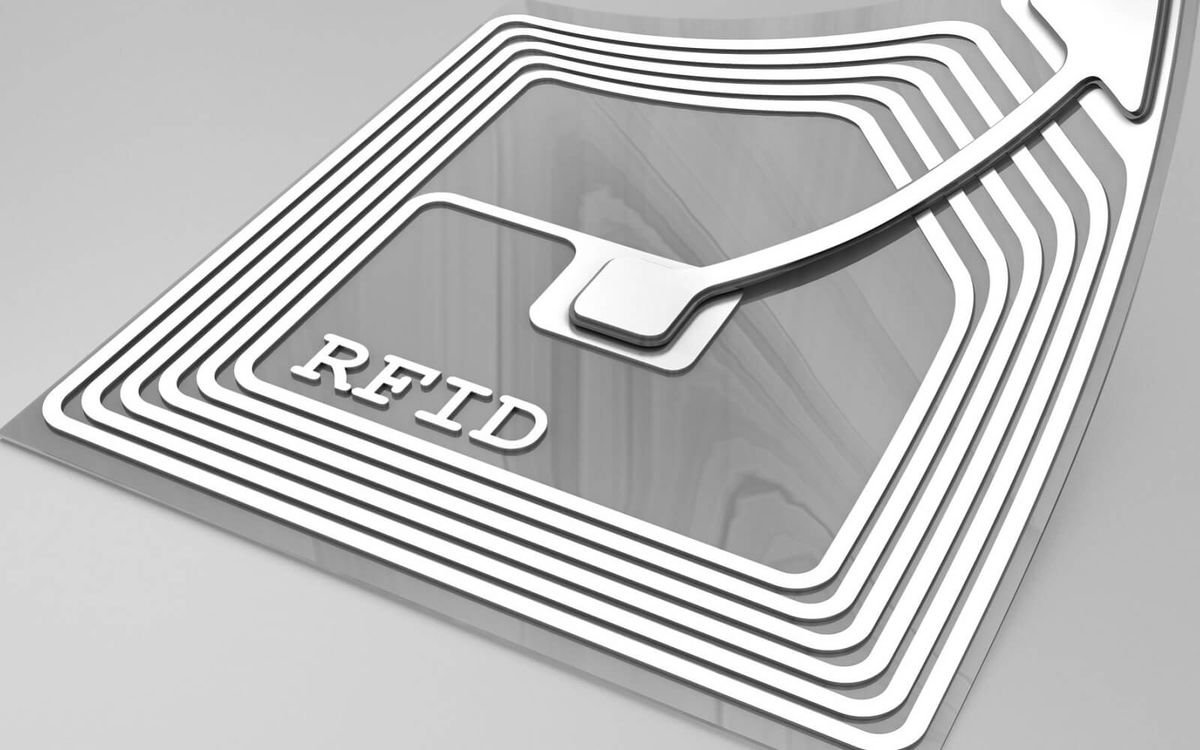
RFID asset management uses RFID tags attached to physical assets and RFID readers to identify, count and track those assets without requiring line-of-sight barcode scanning. The software maintains each asset's identity, location, ownership, movement, condition, audit history and lifecycle.
For the engineering detail behind each stage, see RFID asset tracking and RFID middleware and device management in our knowledge hub.
- AssetThe physical item you own
- RFID TagCarries a unique EPC identity
- ReaderHandheld, fixed, gate or desktop
- MiddlewareFilters, de-duplicates, applies rules
- Asset PlatformRegister, audit, transfer, maintain
- ERP / CMMS / WMSFinance, maintenance and stock
Why Organisations Move From Barcode Spreadsheets to RFID
Read accuracy depends on tag choice, placement and RF environment. See RFID read accuracy and missed reads for how we design around it rather than assume 100%.
Complete RFID Solution Architecture
Swedish Technology supplies the whole stack — tags, capture hardware, middleware, the asset platform and the enterprise integration — so one party is accountable when a read fails at 6am rather than three vendors pointing at each other.
Why the stack matters
A missed read is rarely one component's fault. Tag choice, antenna angle, middleware filtering and the platform rule that consumes the read all have to agree. Owning the whole chain is how we commit to a read-accuracy figure instead of a datasheet number.
RFID Is the Capture Method. The Register Is the Product.
The asset register has to hold enough structure to satisfy finance, maintenance, IT and audit at the same time — one record, many consumers.
Laptop · IT equipment · EPC 3034 F0B2 2C1A 9D00
Identity & classification
- Asset ID
- RFID EPC
- TID
- Barcode
- QR code
- Serial number
- Asset category
- Asset type
- Manufacturer
- Model
- Supplier
- Custom fields
Ownership & location
- Company
- Branch
- Site
- Building
- Floor
- Room
- Warehouse
- Bin
- Department
- Cost centre
- Employee
- Custodian
Commercial & lifecycle
- Purchase date
- Purchase price
- Warranty
- Asset status
- Condition
- Depreciation integration
- Disposal record
Evidence & history
- Photos
- Documents
- Maintenance data
- Audit history
- Movement history
- Approval trail
Depreciation values are shown where the platform is integrated with your ERP or finance system. The asset register does not replace the statutory fixed-asset ledger.
Every State Change Is a Recorded Transaction
With a user, a timestamp and, where policy requires, an approval.
- 1Purchase
- 2Receive
- 3Tag
- 4Register
- 5Assign
- 6Transfer
- 7Audit
- 8Maintain
- 9Return
- 10Dispose
Want to see the register, audit and transfer workflow against your own asset types?A 30-minute walkthrough on your asset categories, not a generic demo.
Request Asset Management DemoChoose the Correct Tag for Every Asset
There is no universal RFID tag. A label that performs perfectly on a cardboard carton will read poorly when stuck to a metal server chassis, and an industrial tag rated for a paint oven is wasted on office furniture. Tag selection is the single biggest determinant of whether a deployment works.
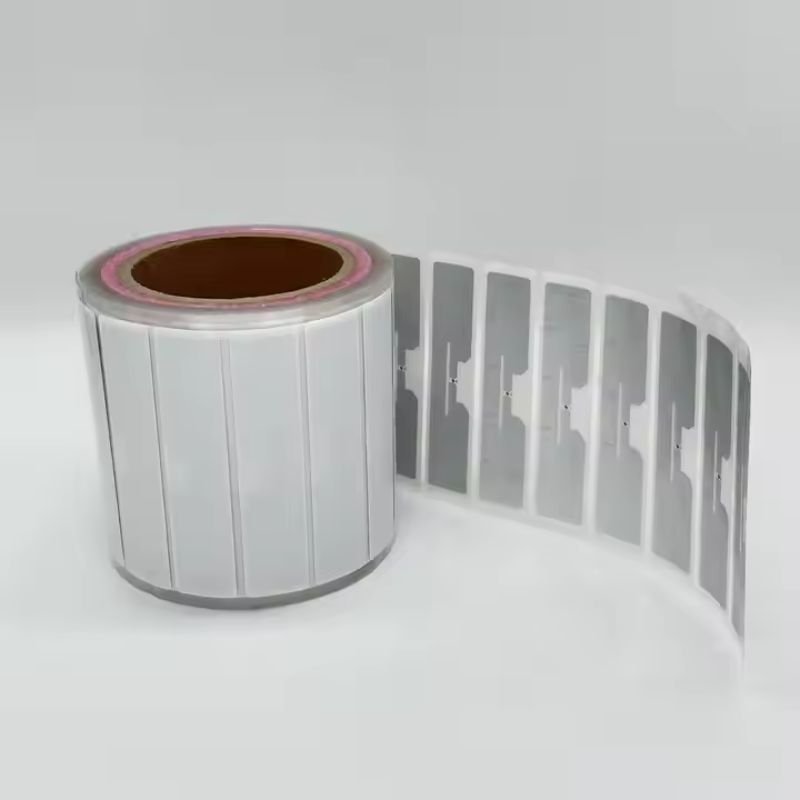
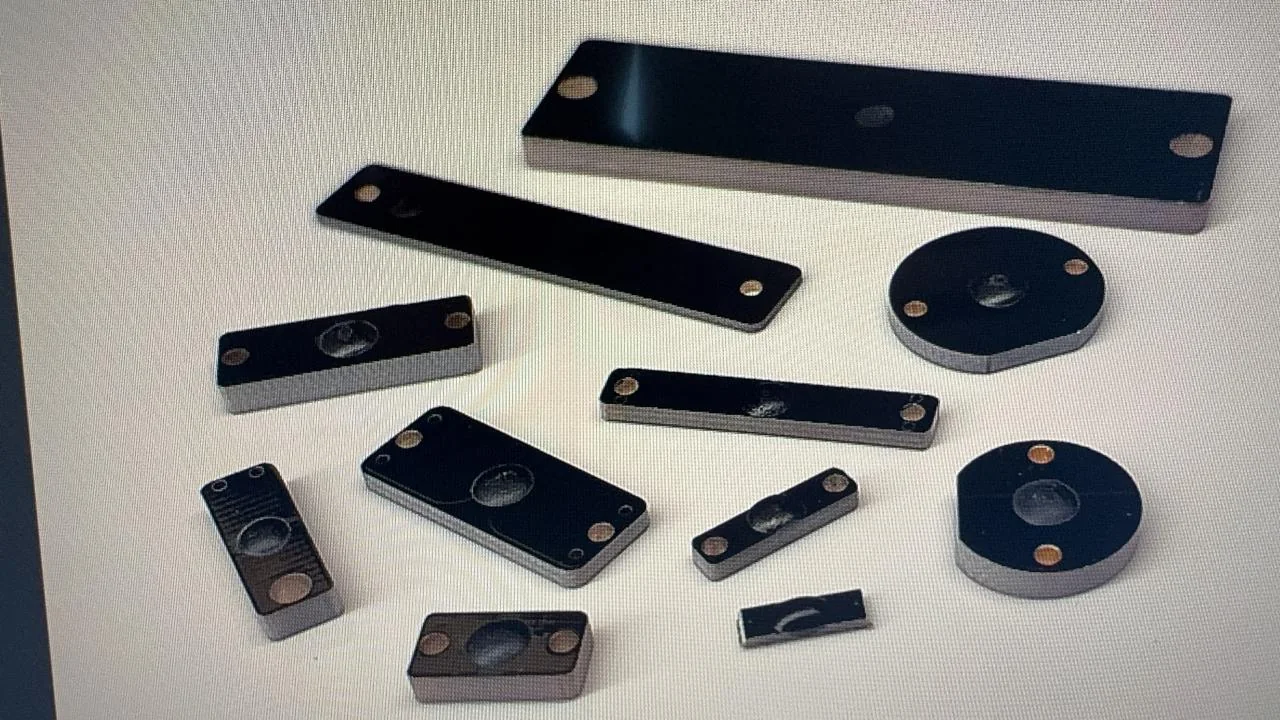
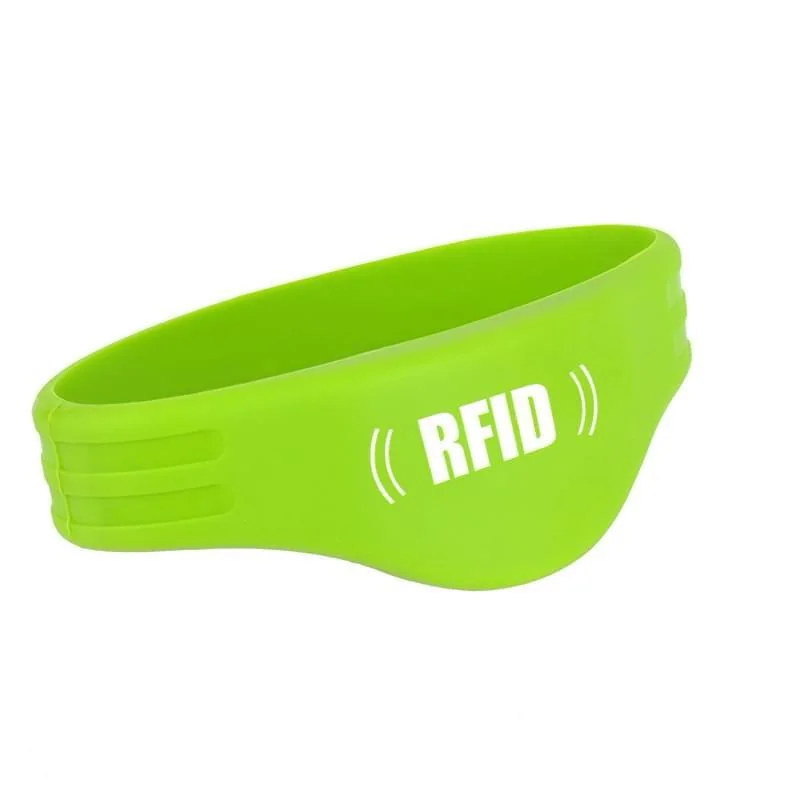
Active, BLE and UWB tags belong to real-time location rather than identification — see MOWQIE RTLS. Full technical selection criteria: RFID tag directory and selection guide.
RFID Tag Selection Table
| Tag type | Best for | Surface | Environment | Mounting | Durability | Reusable | Price category | |
|---|---|---|---|---|---|---|---|---|
| Standard UHF label | Cartons, files, plastic | Non-metal | Indoor | Adhesive | Low | No | Economy | Request price → |
| On-metal tag | Laptops, servers, panels | Metal | Indoor | Adhesive / screw | Medium | No | Standard | Request price → |
| Rugged anti-metal | Machinery, site equipment | Metal | Indoor / outdoor | Screw / epoxy | High | Yes | Industrial | Request price → |
| Cable tag | Cables, fibre, harnesses | Mixed | Indoor | Cable tie | Medium | Yes | Standard | Request price → |
| Small IT tag | Phones, tools, devices | Metal / plastic | Indoor | Adhesive | Medium | No | Standard | Request price → |
| High-temperature | Process and oven assets | Metal | Industrial | Screw / embedded | High | Yes | Specialty | Request price → |
| Laundry tag | Uniforms, linen | Textile | Wash cycles | Sewn / heat-seal | High | Yes | Specialty | Request price → |
| Windshield tag | Vehicles, fleet | Glass | Outdoor | Adhesive | Medium | No | Standard | Request price → |
Price category is a relative guide, not a quotation. Read range, memory and durability vary by inlay and manufacturer — final selection is confirmed by testing on your actual asset.
RFID Tag Finder
Answer seven questions and we will narrow you to a tag category. This is a starting point for testing, not a substitute for it — we still validate the shortlisted tag on your real asset.
The recommendation updates as you choose. Every selection changes which tag family will physically survive and read reliably on your asset.
Request Price for This TagWhat Moves the Price — and How We Quote
Tag and reader pricing moves with specification and volume, so a single published figure would be misleading within weeks. What we can give you honestly is the cost structure, and a real quote against your actual requirement.
RFID tag cost drivers
The largest single lever is usually quantity. The second is whether the tag has to work on metal — that alone typically separates the economy and standard categories.
Volume tiers we quote at.
Tag price categories
How we quote
We quote current pricing per SKU with the date checked, VAT position, availability status and a validity period. We do not publish permanent price figures for hardware whose cost and availability move month to month.
Reader cost drivers
Competitive, bulk, project, volume and wholesale pricing — send the asset material, quantity, tag size and application.
Handhelds, Fixed Readers, Antennas & Printers
We specify hardware around the requirement rather than around a single vendor relationship. Model-level specifications live on the dedicated knowledge pages, where they are kept current as manufacturers refresh their ranges.
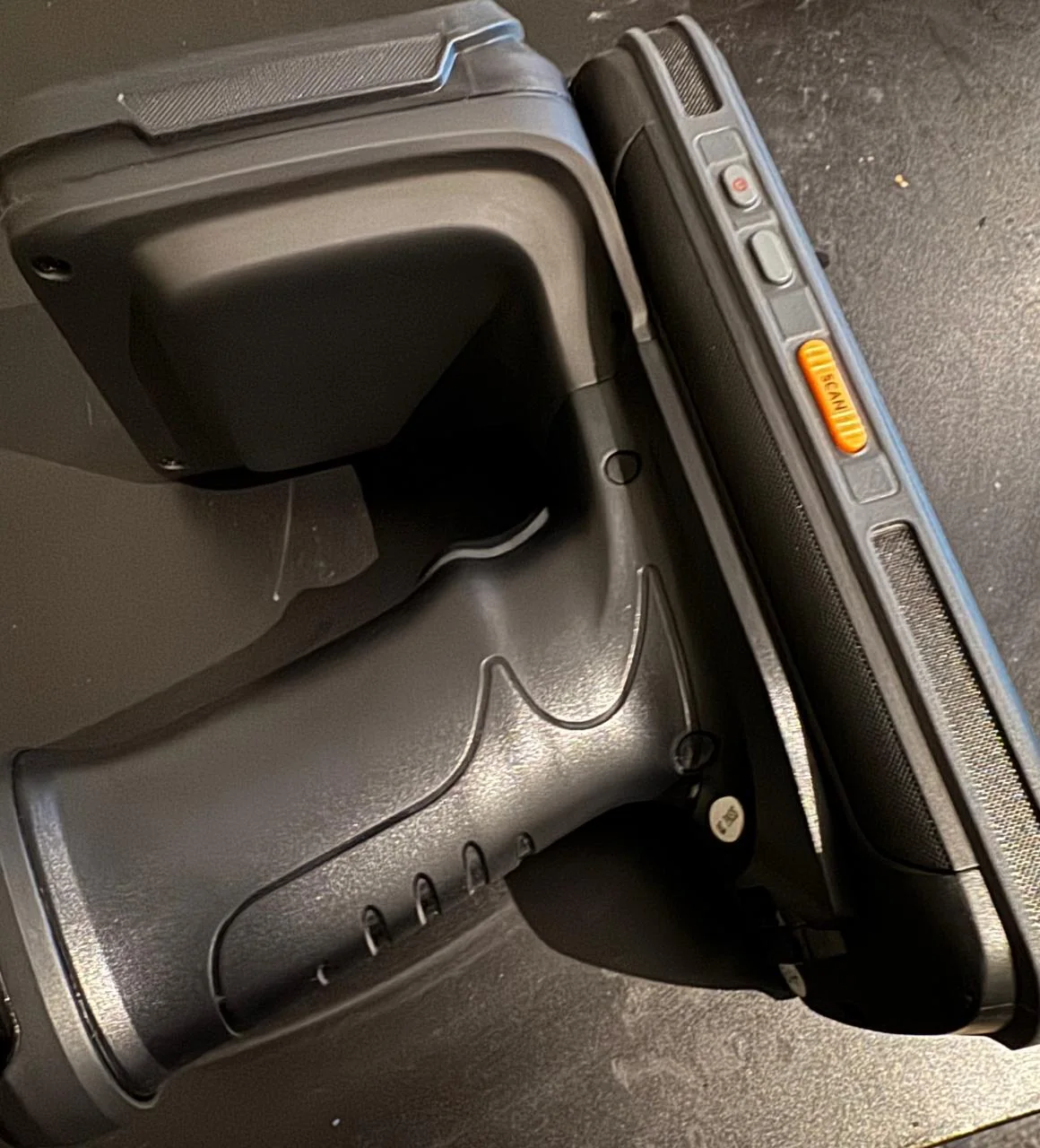
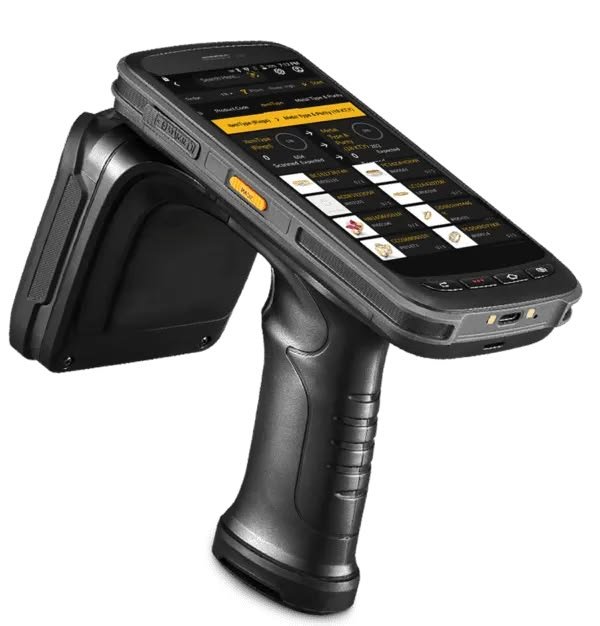
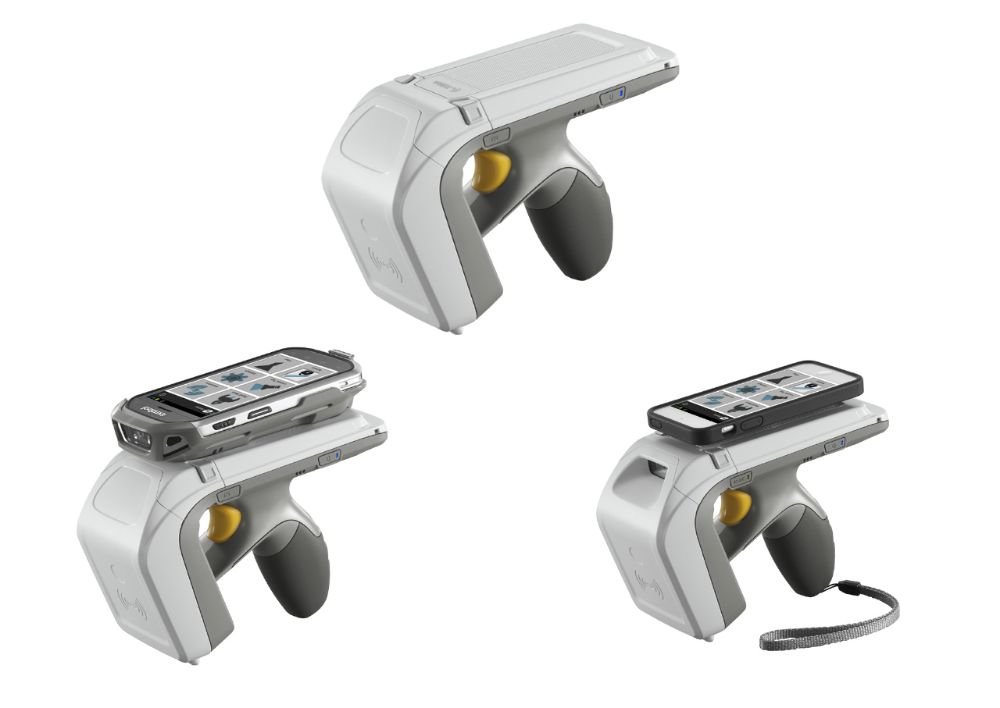
RFID Handheld Readers UAE
The handheld is where your team meets the system. Ruggedness, battery life and how quickly it reads a full rack matter more day to day than the spec sheet headline.
What buyers actually compare
Selection criteria in depth: handheld RFID readers for inventory, audits and field teams.
RFID Reader Brands We Design With
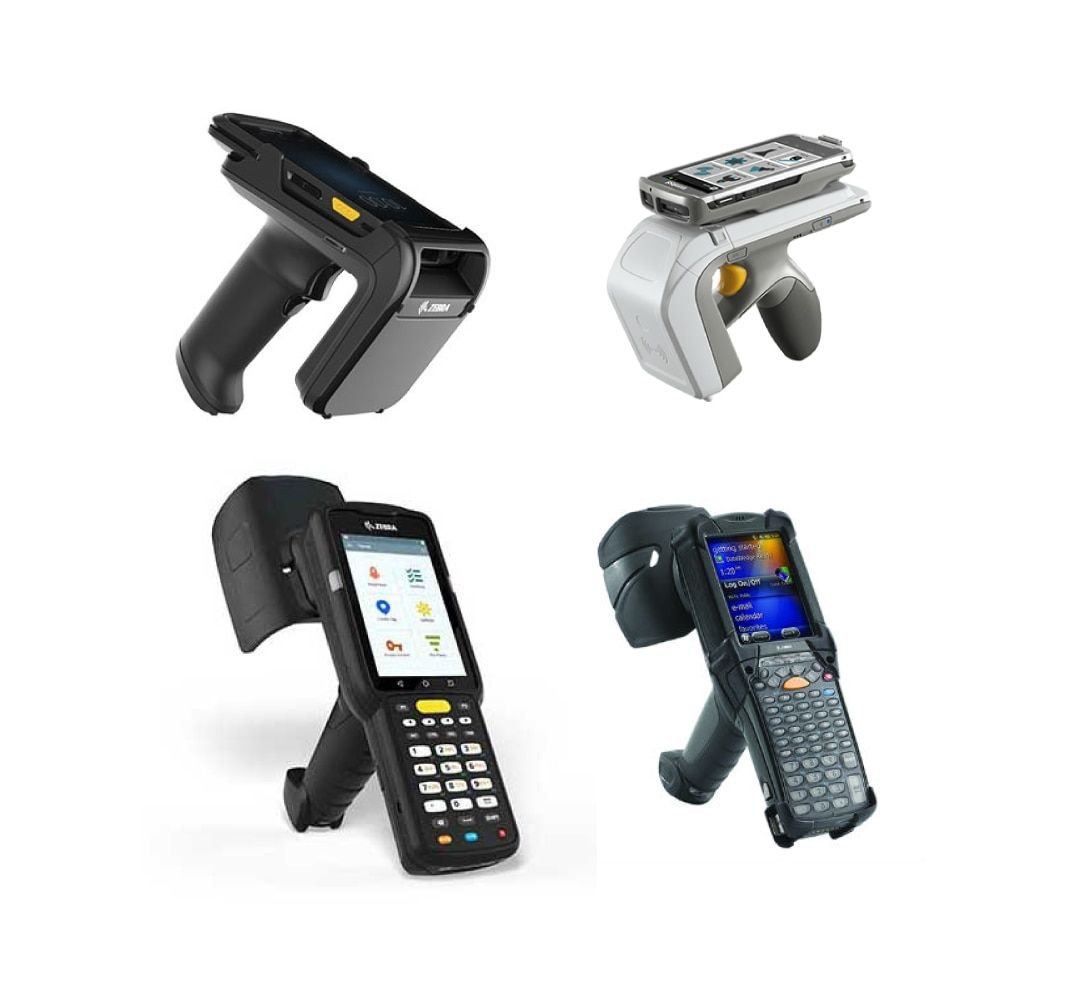 Zebra RFID
Suits organisations that want a broad enterprise mobility ecosystem — device management, accessory range, long lifecycle support and a mature SDK for integration. Typically the choice where a large fleet has to be managed centrally for years.
Zebra RFID readers, SDK & integration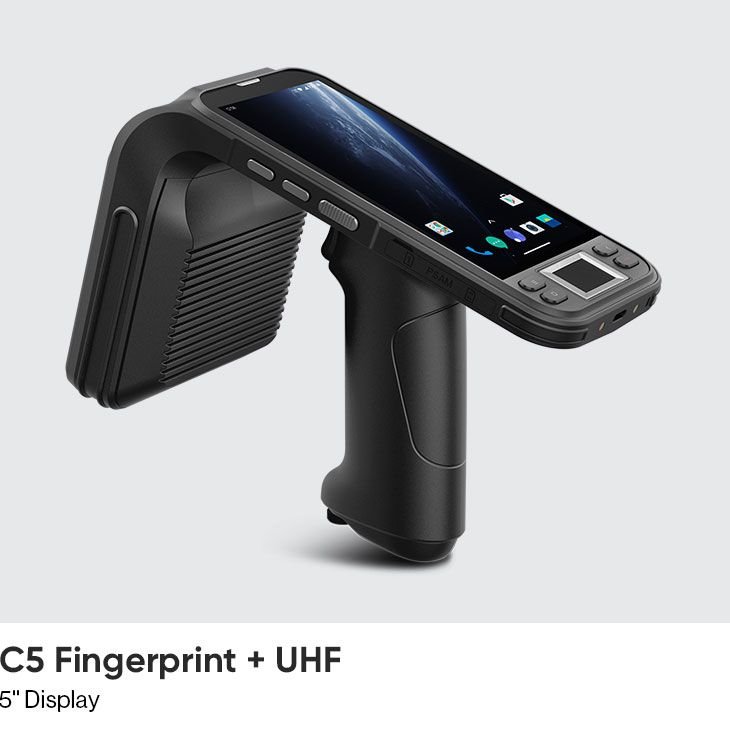 Chainway RFID
Attractive where you need rugged Android UHF capability with different commercial economics — often a strong fit for growing fleets, project deployments and teams that want capable hardware without a premium ecosystem commitment.
Chainway RFID handhelds & mobile data captureReader platforms and chips widely used in fixed-infrastructure and gate deployments where read performance is critical.
Impinj R700 and R720 readersFixed readers and embedded modules, often used where an integrator needs a cost-effective building block.
Chafon fixed readers & modulesSpecialised RFID handhelds with a strong following in inventory-heavy operations.
Bluetooth RFID sleds that pair with existing phones and tablets.
How to read this list. Swedish Technology designs RFID systems around suitable enterprise hardware based on project requirements, availability and integration needs. We do not describe ourselves as an authorised partner, distributor or exclusive agent for any manufacturer listed here, and we do not publish model specifications without verifying them against current official documentation.
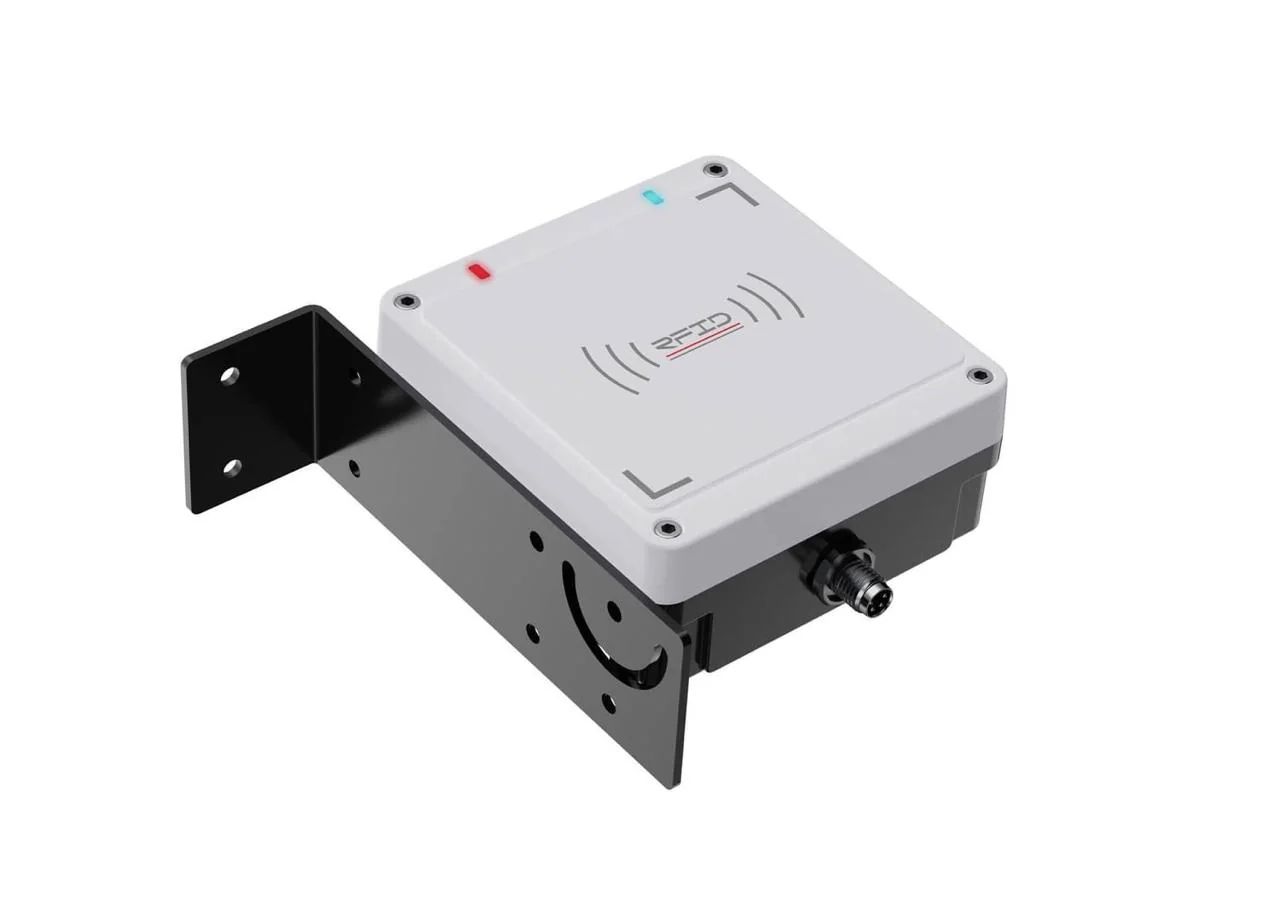
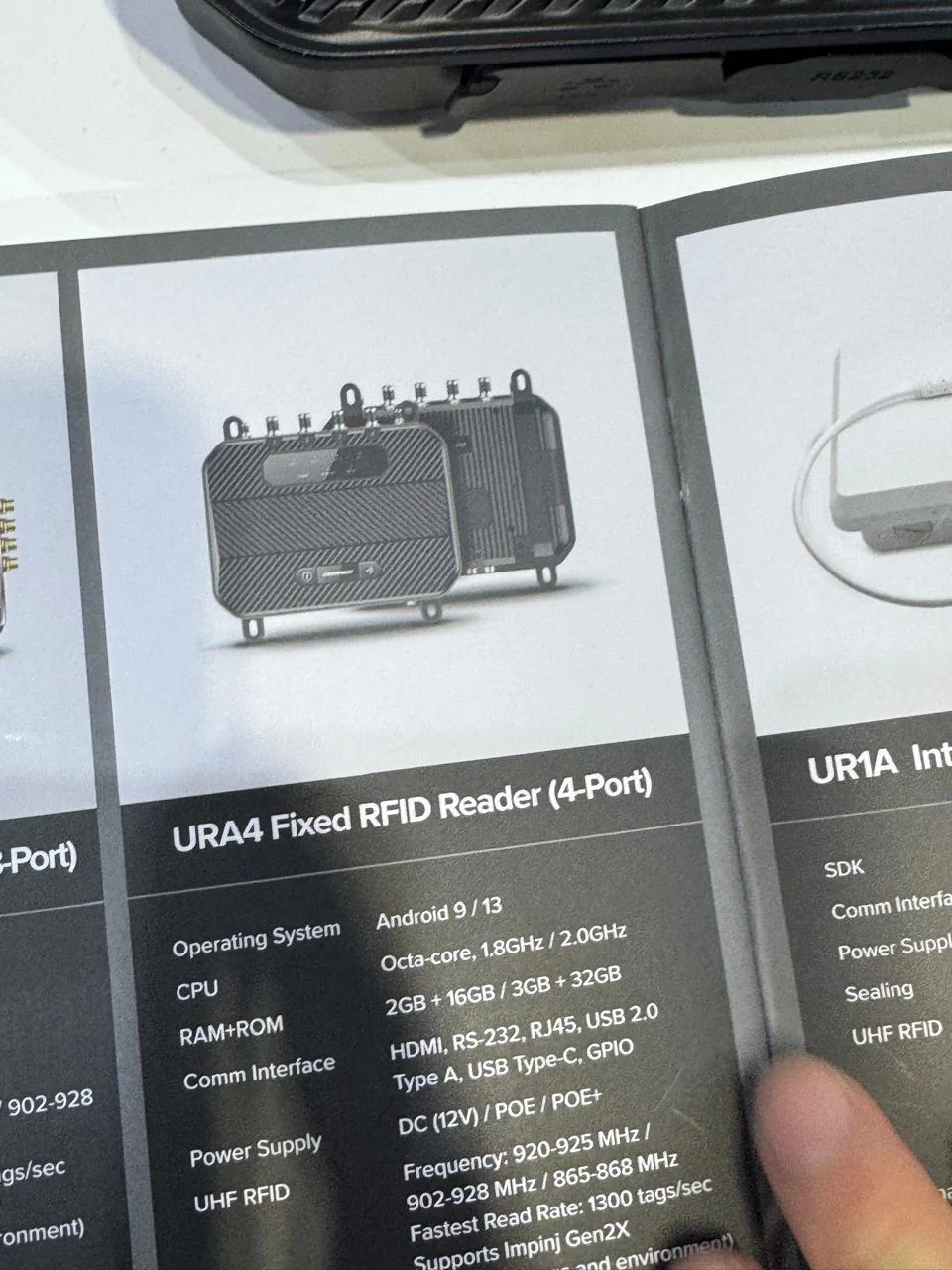
Fixed Readers & RFID Antennas
Handhelds tell you what is there when someone goes looking. Fixed infrastructure tells you what moved, when, and in which direction — without anyone doing anything.
Reader specification is a design input, not a shopping list
Port count, RF power range, the frequency band approved for the UAE, interface options and whether the reader runs its own logic all change what the gate can do. A four-port reader covers a wide dock door; a one-port reader will not, however the antennas are arranged.
Antenna types
Antenna choice follows tag orientation, the surrounding metal, the read zone you want to create, cable loss and mounting constraints — not brand preference. Getting this wrong is the most common cause of a gate that "sometimes works". RFID antenna directory and read-zone selection · Fixed RFID readers

RFID Printers & Encoding
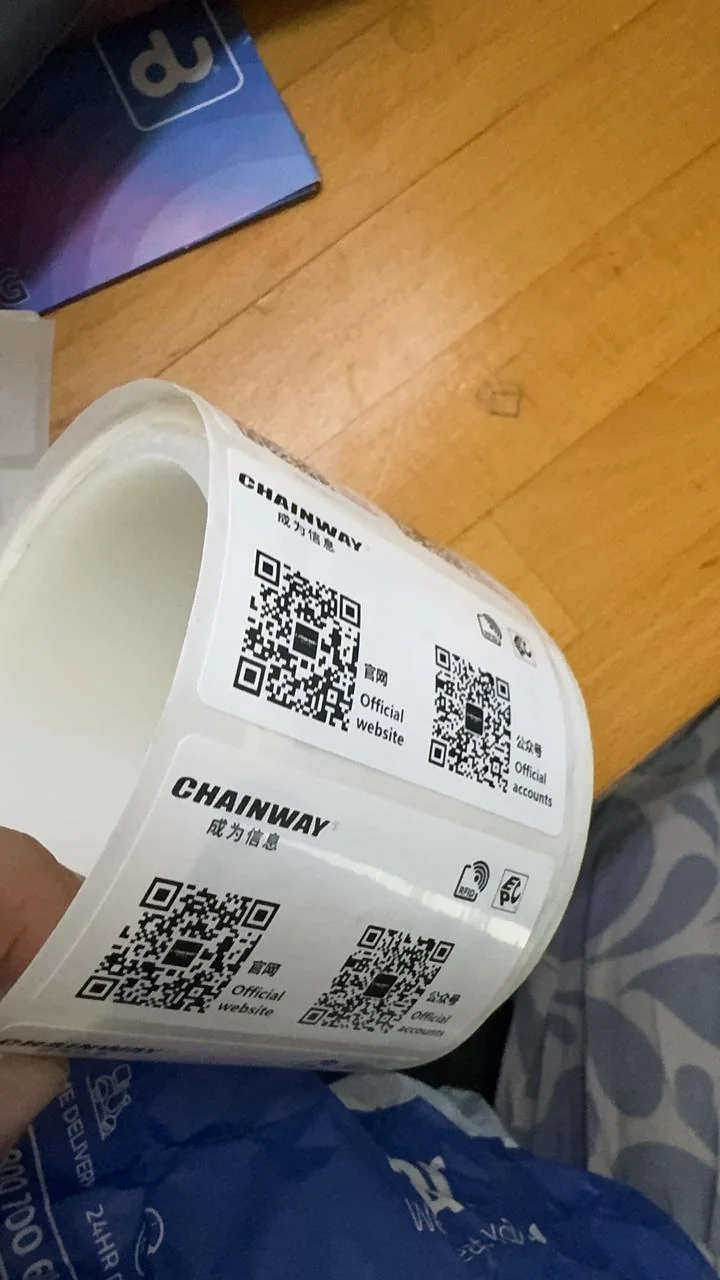
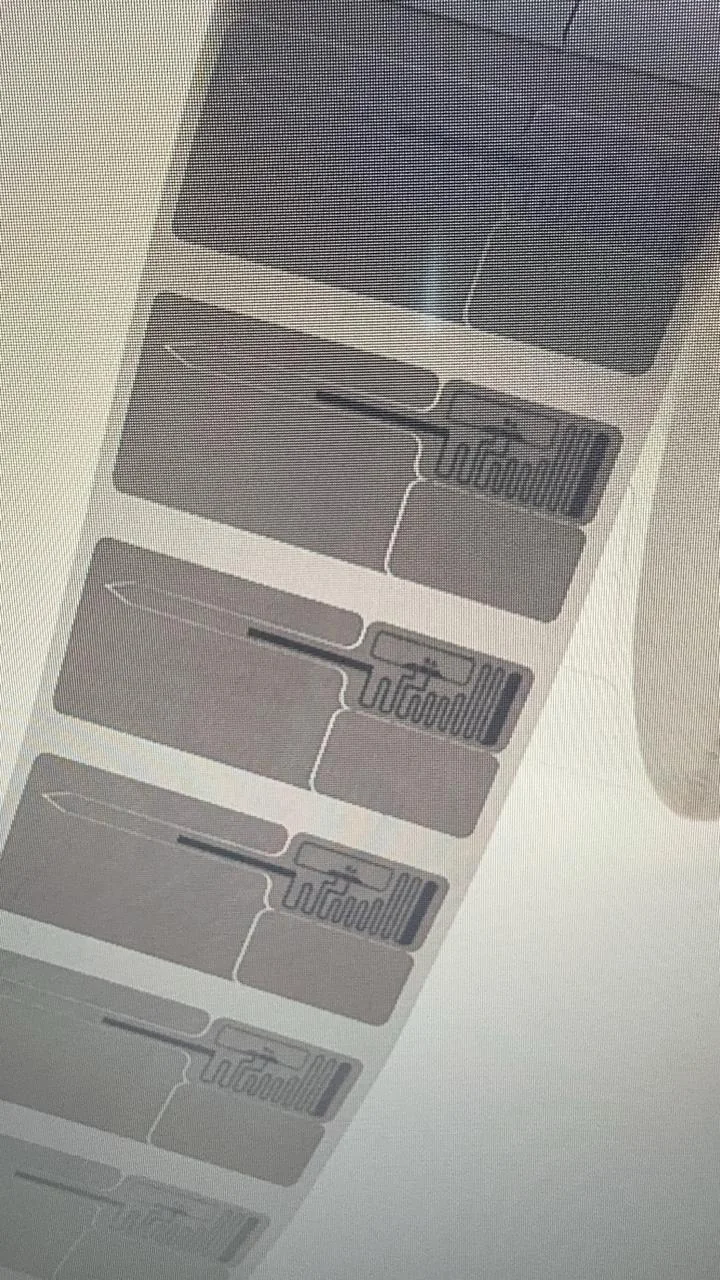
Printer-encoders write the EPC and print the human-readable asset label in one pass, so the tag on the asset and the record in the system are created together rather than reconciled later.
What we print and encode
RFID printers and encoders in the knowledge hub.
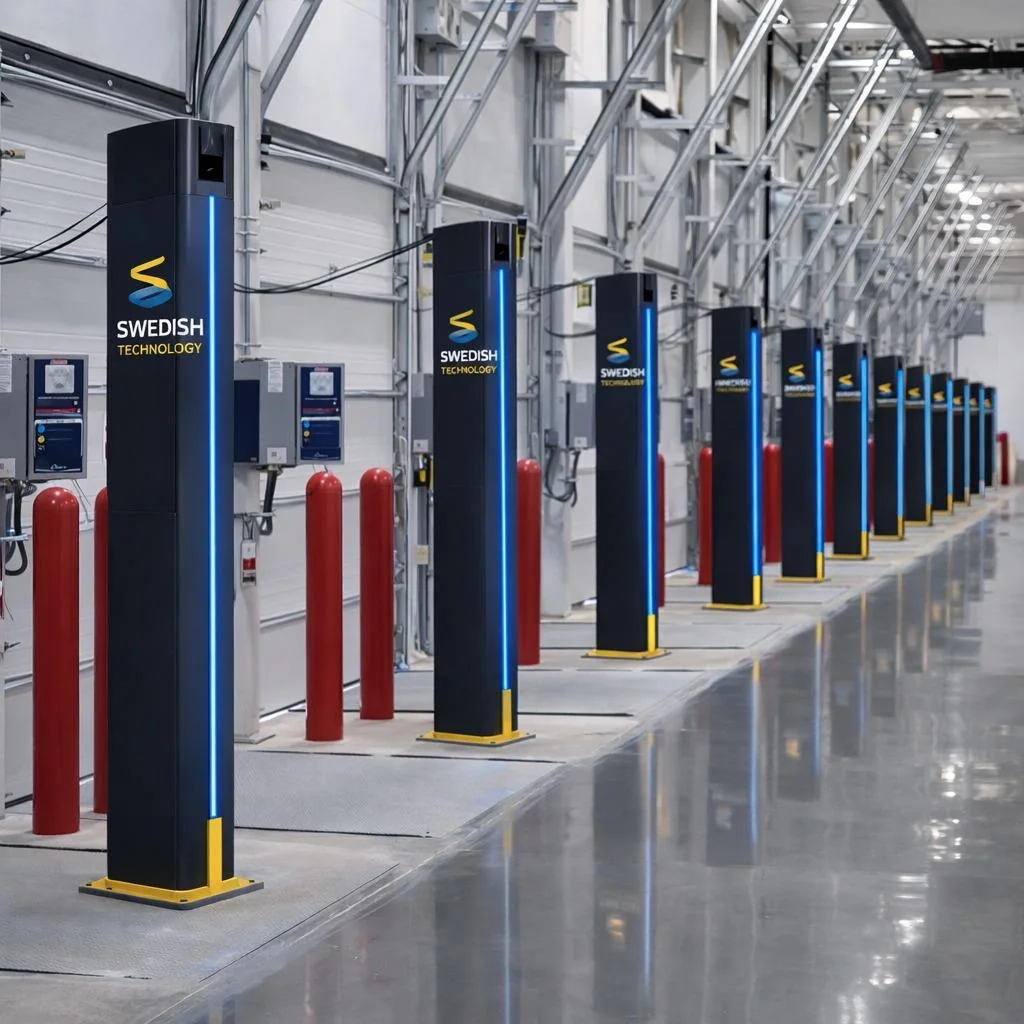
Our RFID Gate and Portal Hardware
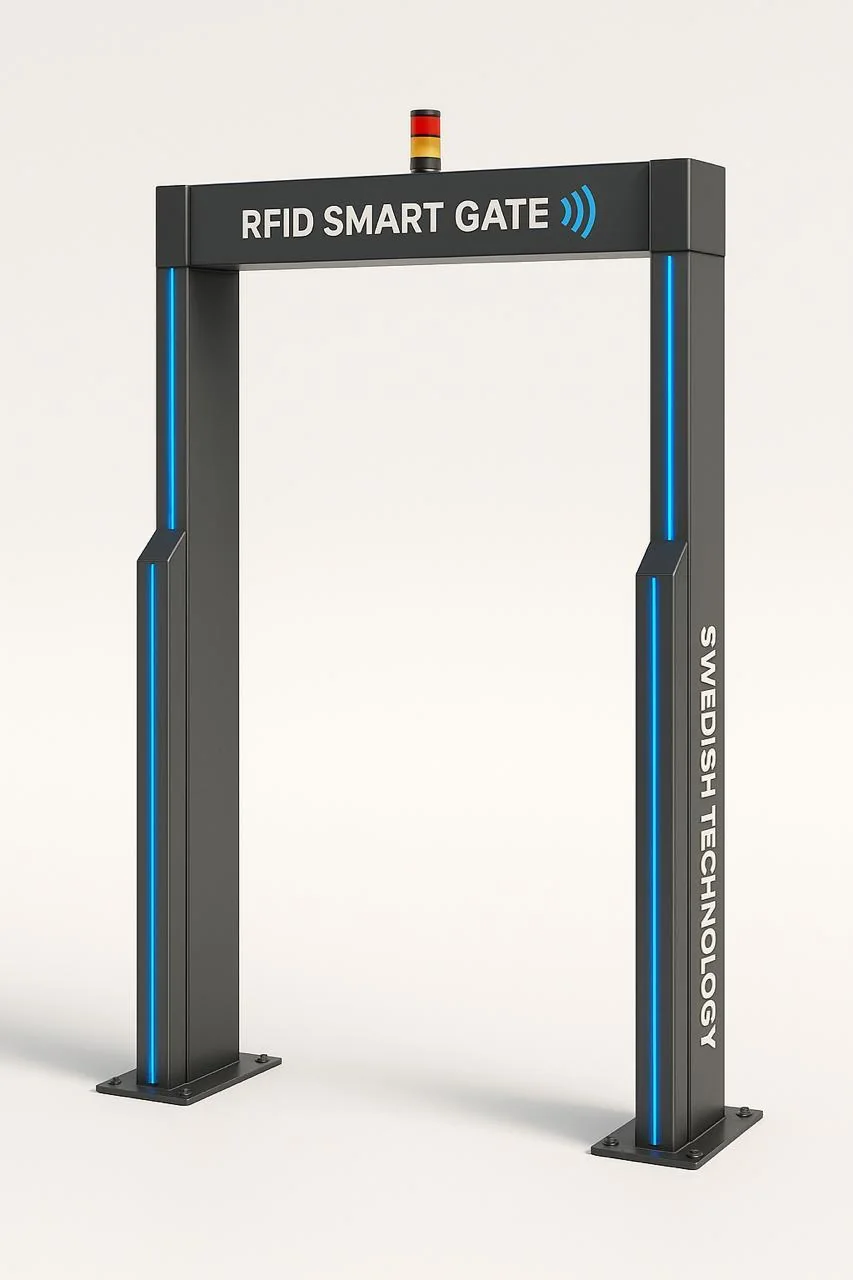
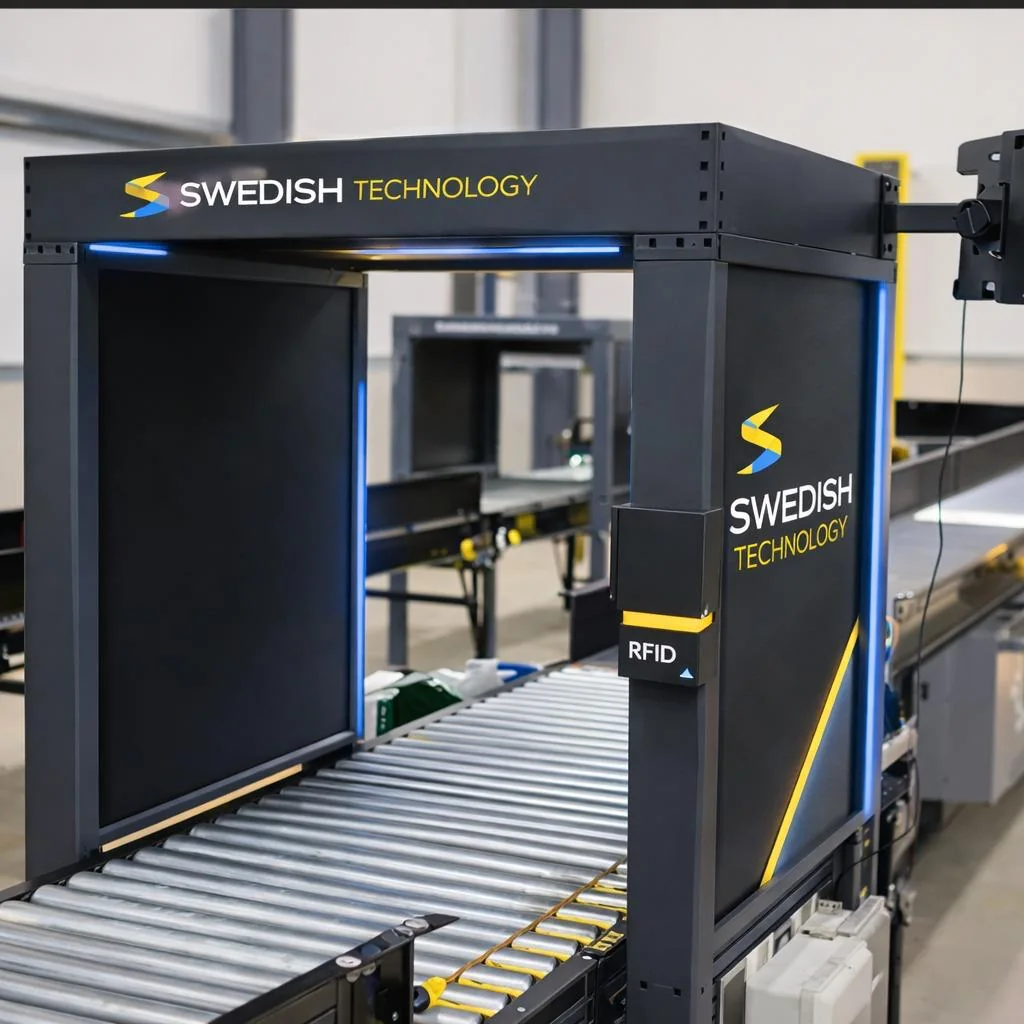
Portal, pedestal, conveyor-tunnel and dock-door configurations we build and commission. Geometry and antenna count follow the read zone the site actually needs.

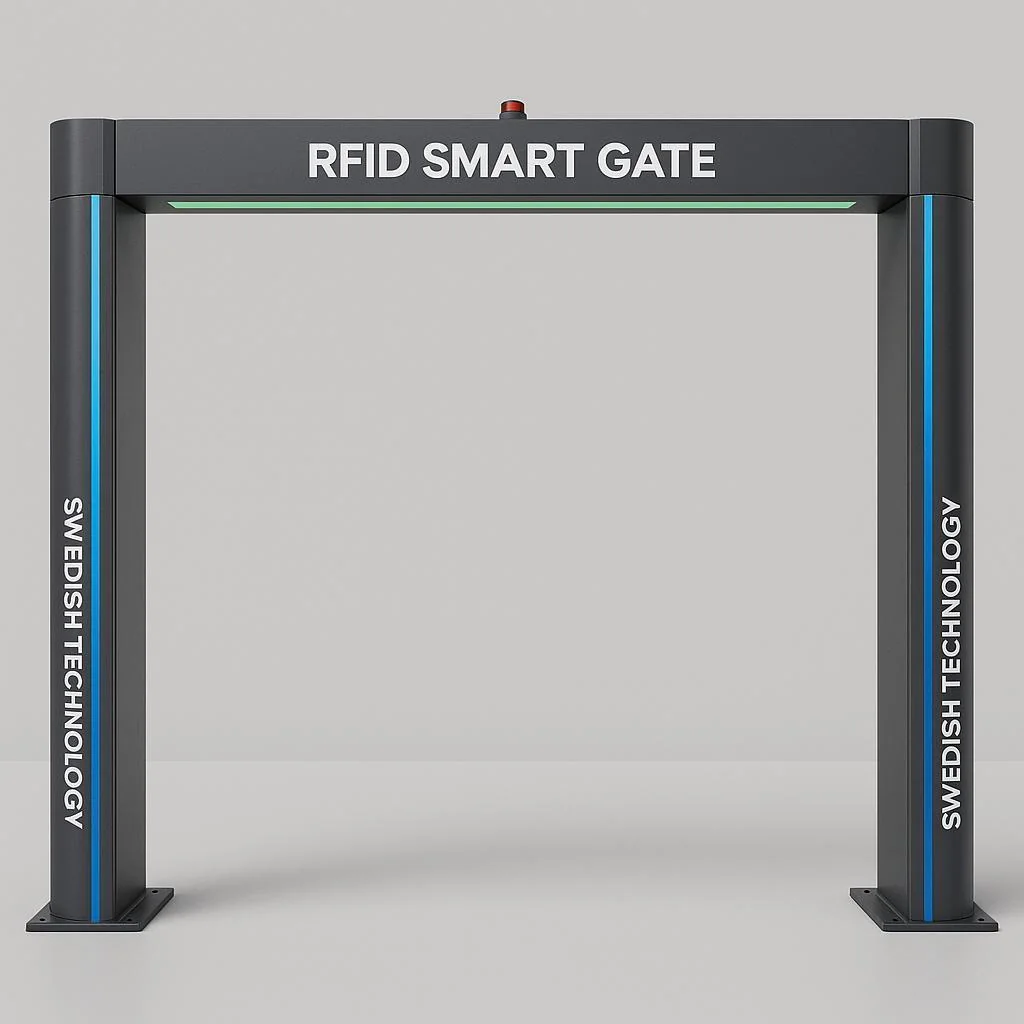
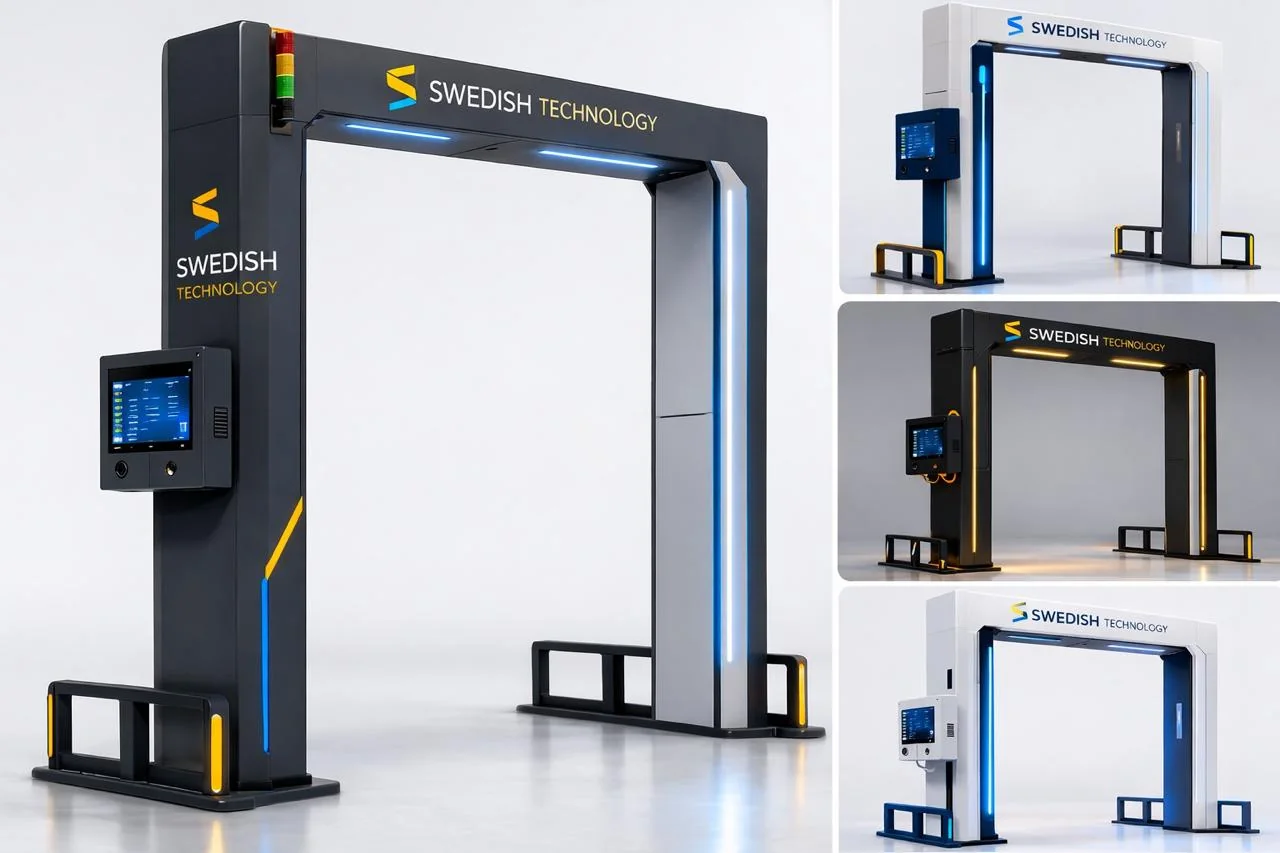
How an RFID gate is actually built
What a gate does
- Detect an asset entering or leaving a controlled area.
- Determine direction from antenna sequence and sensor input.
- Match the movement against an approved transfer order.
- Raise an alert when an asset leaves without authorisation.
- Count assets and record the time and the person involved.
Why gates are hard — and how we handle it
Cross-reads from tags outside the gate, metal reflections, multipath, dense tag populations, awkward orientation and adjacent gates interfering with each other are the normal failure modes. They are solved with antenna selection and tuning, directional and shielded designs, RF power control, physical portal geometry, RSSI and phase logic, sensor fusion and middleware filtering — then proven by commissioning tests.
RFID gate system design and tuningHave a dock door, store room or campus exit you need controlled?We size the portal to the opening after an RF survey, not from a catalogue.
Design My RFID GateWhere Audits, Transfers and Searches Actually Happen
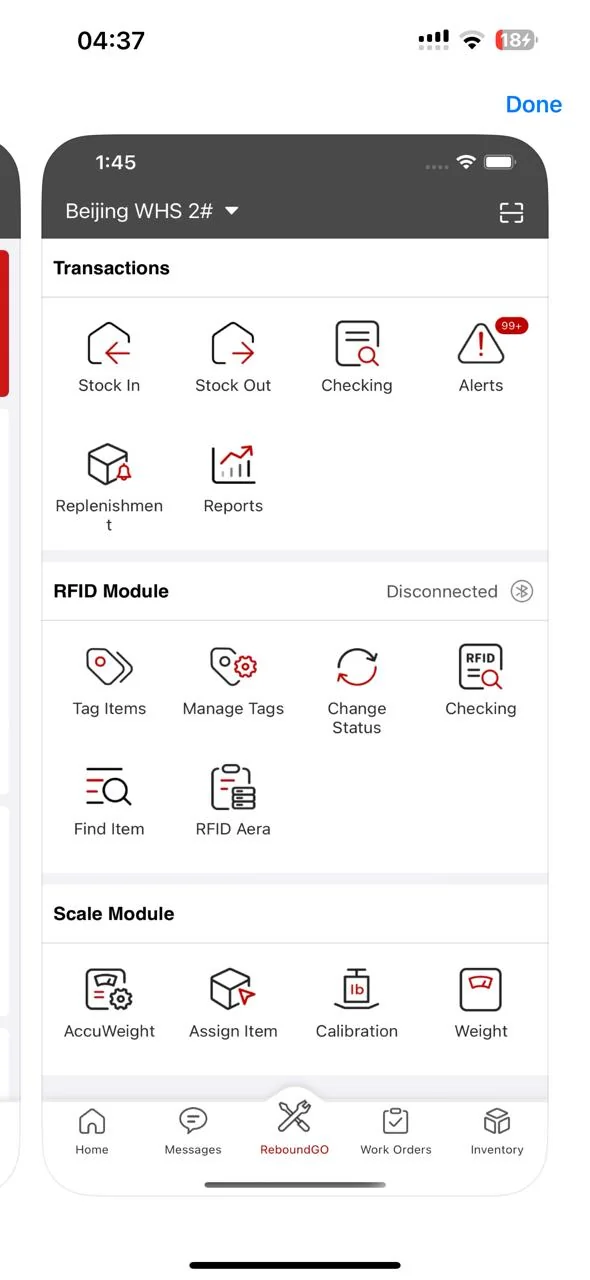
The handheld app has to work in a basement store room with no signal. Count orders, asset data and checklists are held locally and synchronised when connectivity returns.
Locate mode
Search for a single asset — say a Dell Precision workstation — and the handheld converts signal strength into proximity feedback. Range and precision depend on the reader, tag and surrounding metal, so this narrows you to a shelf rather than pinpointing a coordinate.
Where RFID Asset Management Is Used
Warehouse operations connect to Octopus WMS; building and equipment maintenance connects to facility management. Deep dive: RFID inventory management in the warehouse.
Laptops, desktops, servers, monitors, printers, switches, routers, phones, tablets, drives, UPS and network equipment — tracked with employee assignment, warranty, serial, status and disposal. On-metal tags are essential for most of this equipment.
Dense stacked metal is the hardest RFID case there is. It needs on-metal tag selection, tested placement, container design and reader configuration — sometimes physical separation. We test before committing to a tag.
Power tools, hand tools, test and calibration equipment across issue, return, custodian, tool crib, missing status, calibration due and maintenance.
Pallets, cages, reusable transport items, forklifts and high-value stock across receiving, tagging, storage, transfer, audit and dispatch.
Asset register, custodian, department, location, audit, transfers, approvals, asset committees, disposal, document attachments and full audit trail — commonly on-premises with Arabic and English.
Medical equipment, wheelchairs, pumps, portable devices and IT assets. Where you need continuous position rather than transaction reads, RTLS is the right tool.
Tools, machinery, laptops, site equipment, containers and temporary assets across sites — often combining RFID with GPS or BLE depending on what "where is it" has to mean.
Laptops, smartboards, laboratory equipment, AV equipment and furniture across campuses and faculties.
Room assets, AV and IT equipment, housekeeping equipment and furniture, with laundry tags for linen and uniforms.
Tracking laptops, servers and IT equipment across offices?On-metal tags, employee assignment and disposal trail — the most common starting point.
Discuss IT Asset TrackingRFID vs Barcode, QR, BLE, UWB and GPS
RFID does not replace barcode everywhere, and it is not a real-time location system. Choosing the wrong technology is more expensive than choosing the wrong vendor.
| Technology | Best for | Line of sight | Bulk read | Position | Cost per asset |
|---|---|---|---|---|---|
| Barcode / QR | Individual scanning, universal, very low cost | Required | No | None | Lowest |
| UHF RFID | Identification, audits, gates, bulk inventory | Not required | Yes | Read-point only | Low |
| BLE | Zone and proximity awareness | Not required | Yes | Zone level | Medium |
| UWB | High-accuracy indoor real-time location | Not required | Yes | Sub-metre class | Higher |
| GPS / GNSS | Outdoor vehicles and mobile assets | Not required | n/a | Outdoor position | Higher |
The usual answer is a combination: RFID and barcode in one asset platform, with RTLS added only where continuous position genuinely changes an operational decision. Detail: RFID vs barcode · RFID vs BLE · MOWQIE RTLS.
One Asset Identity, Every System
Integration method is stated deliberately. None of the below is offered as a pre-certified native connector. Each is built as API, middleware or custom integration and confirmed against the versions, licences and network access in your environment.
| System | Typical data flow | Method |
|---|---|---|
| Odoo | Assets, inventory, employees, maintenance, purchase, invoices | API / Custom |
| SAP | Asset master, materials, purchase orders, EAM data | API / Middleware |
| Oracle | Asset and finance data, procurement, Fusion and WMS | API / Middleware |
| Microsoft Dynamics 365 | Vendors, purchasing, cost centres, asset finance | API |
| NetSuite | Asset and purchase records | API |
| WMS | Stock, locations, movements — including Octopus WMS | API / Native |
| CMMS / CAFM / EAM | Work orders, maintenance history, spare parts | API |
| ServiceNow | IT asset and configuration records | API |
| Custom / other | Any system exposing an interface | REST, webhooks, JSON, middleware |
Detail: RFID and SAP integration · RFID and Oracle integration · ERP system integration.
Built for Government and Regulated Environments
Group → Company → Country → Branch → Site → Building → Floor → Room → Bin → Asset, with consolidated reporting across UAE, Saudi Arabia, Oman and the wider GCC.
Deployment
Government and regulated customers commonly require on-premises. Functionality does not change with hosting model.
Security
Every transaction carries a user, a timestamp and, where policy requires, an approval.
Multi-site structure
Hierarchical locations from group down to bin, consolidated reporting per country or company, and Arabic and English interfaces for government deployments.
Implementation methodology
Never select an RFID tag from a catalogue alone
Datasheet read ranges are measured in free space on a reference surface. Your asset is not a reference surface. We test representative tags on the actual asset, in the actual environment, before anyone commits to a purchase order — because the cost of re-tagging twenty thousand assets dwarfs the cost of a test.
RF site survey covers
Proof of concept
A short, scoped PoC validates tag selection, read accuracy, gate detection, handheld inventory speed, the location workflow, integration and how your team actually uses it — before a full rollout is committed.
Frequently Asked Questions
Grouped by topic. Still unsure? Send us the asset and the environment and we will answer against your case rather than in general.
RFID asset management basics
RFID asset management uses RFID tags attached to physical assets and RFID readers to identify, count and track those assets without line-of-sight scanning. The software maintains each asset's identity, location, ownership, movement, condition, audit history and lifecycle.
Each asset carries a tag with a unique EPC. Readers — handheld, fixed, gate or desktop — energise nearby tags and collect their identifiers. Middleware filters and de-duplicates those reads, then the asset platform records what was seen, where and when, and applies your business rules.
Yes. Bulk reading is the main operational advantage over barcode — hundreds of tags can be read in seconds, which is what makes fast audits and gate detection possible.
UHF RFID does not need line of sight and generally reads through cardboard and most plastics. Metal and liquids block or detune signals, so cartons containing metal items or liquid need tested tag placement.
Yes, using on-metal tags sized for the chassis. Laptops, servers, monitors, switches and network equipment are common RFID asset-tracking use cases, with employee assignment, warranty and disposal tracked alongside.
It can, but it is one of the harder cases: dense stacked metal detunes tags and shields neighbours. It requires careful on-metal tag selection, tested placement, sometimes container redesign and reader configuration. We validate this before committing to a tag.
Yes. Tool cribs are a strong RFID use case — issue, return, custodian, calibration due and missing status, with on-metal tags suited to the tool body.
Not universally. Barcode remains cheaper and is unavoidable on supplier-labelled goods. The practical approach is RFID, barcode and QR in one asset platform, using each where it is strongest.
RFID answers what you own and what was detected at a read point or during an audit. RTLS continuously reports where a mobile asset is right now, using BLE or UWB. Many organisations need both.
Tags, metal and pricing
An on-metal UHF tag. Ordinary labels detune against conductive surfaces and read poorly or not at all. On-metal tags include a spacer or ground plane so the antenna still tunes correctly. Final selection should be tested on the actual asset, because enclosure shape and tag placement change the result.
A tag engineered to work when mounted directly on metal, using a spacer, ferrite layer or ground plane. Rugged anti-metal variants add a sealed housing for outdoor, industrial and high-impact environments.
Standard labels do not work reliably on metal. On-metal and anti-metal tags are designed specifically for it and work well when correctly selected and placed. This is one of the most common reasons a poorly specified deployment underperforms.
Tag cost depends on type, chip, inlay, size, memory, on-metal design, IP and temperature rating, adhesive, printing, encoding, customisation and above all quantity. Rather than publish figures that go out of date, we quote current project pricing against your actual specification with a stated validity period and VAT position.
Quantity first, then whether the tag must work on metal. Those two factors typically separate the economy, standard and industrial categories more than any other specification.
Paper or film UHF labels for indoor, non-metal assets are the most economical, particularly at volume. They are unsuitable for metal, outdoor exposure, high temperature or wash cycles.
Swedish Technology supplies RFID tags across the UAE and GCC as part of an asset management solution or as standalone hardware. Send the asset material, quantity, size and application and we will recommend a suitable tag with project pricing.
Yes. We quote volume tiers at 100, 500, 1,000, 5,000, 10,000, 50,000 and 100,000+. Larger quantities materially change unit cost, so it is worth telling us the real annual requirement rather than the first order.
UHF, also called RAIN RFID, is the usual choice for enterprise asset and inventory tracking because it offers useful range and bulk reading. HF and NFC serve close-range identification; LF is used in specialised cases; active tags cover long-range scenarios.
Typically a unique EPC identifier, plus a factory-programmed TID and optionally a small amount of user memory. The asset details themselves live in the platform, keyed to that identifier, rather than on the tag.
Readers, gates and antennas
It varies with tag design, reader power, antenna, orientation and environment, so a single universal figure would be misleading. Handheld inventory typically operates over a few metres; fixed portals are engineered to create a defined read zone rather than to maximise distance.
There is no universal best. Zebra suits organisations prioritising a broad enterprise mobility ecosystem and long lifecycle management. Chainway is attractive where you want rugged Android UHF capability with different commercial economics. Selection should follow workflow, support, integration and budget.
Broadly, Zebra offers a wider enterprise ecosystem — device management, accessories, lifecycle support and a mature SDK. Chainway typically offers capable rugged Android UHF hardware at different commercial terms. Both can deliver an effective deployment; the right answer depends on fleet size, existing estate and support expectations.
Price depends on the RFID engine, barcode engine, memory, Android version, connectivity, accessories, docks, spare batteries, warranty and support, plus quantity. We quote per SKU with the date checked, availability and validity period rather than publishing a permanent figure.
A fixed read point at a doorway, dock door or corridor built from a reader, antennas, optional sensors, a controller and software rules. It detects tagged assets passing through and records the movement automatically.
Yes, within limits. Direction is inferred from the sequence in which antenna zones see the tag, often combined with photoelectric or motion sensors. Accuracy depends on gate geometry, antenna placement and the RF environment, and is proven during commissioning rather than assumed.
A handheld function that converts signal strength into proximity feedback while searching for one specific asset. It narrows you to a shelf or rack rather than giving a coordinate, and performance depends on reader, tag and surrounding metal.
It depends on gate width, asset height, tag orientation and whether direction detection is required. Two zones is a common starting point for direction logic, but the correct answer comes from a site survey rather than a rule of thumb.
By tag orientation, surrounding metal, the read zone you need to create, cable loss and mounting constraints. Circular polarisation tolerates mixed tag orientation; linear can give more range where orientation is controlled.
Integration, deployment and data
Yes, typically covering assets, inventory, employees, maintenance, purchases and invoices via API or custom integration, scoped against your Odoo version and modules.
Yes, via API or middleware for asset master data, materials, purchase orders and EAM or finance records. These are built integrations rather than pre-certified native connectors, and scope is confirmed against your versions and access.
The handheld application can be configured to hold count orders, asset data and checklists locally and synchronise when connectivity returns — important in basements, plant rooms and remote stores. Offline scope is defined per deployment.
Not for reading. Tags are read by the reader itself. Network connectivity is needed to synchronise data with the platform, which is why offline capture with later sync is commonly configured.
Yes. Cloud, UAE-hosted, private cloud, on-premises and hybrid deployments are supported, with the same functionality. Government and regulated customers frequently require on-premises.
Yes — from Excel, CSV, a legacy asset system, ERP asset lists or an existing CMMS. The usual constraint is data quality in the source rather than the migration itself, so a data review happens during discovery.
Yes. Tags, handheld readers, fixed readers, gates, antennas, printers and the asset management platform, plus the integration and RF engineering to make them work together as one system.
RFID Engineering Deep Dives
Technical depth on tags, readers, gates, antennas, middleware and integration — maintained separately so it stays current as hardware ranges change.
Ready to scope tags, readers, gates and software against your estate?One accountable supplier for the whole chain.
Request RFID Solution & PricingSolution scenarios
How this typically works for a specific kind of organisation. These are scenarios, not client case studies. See all solution scenarios.