
When an RFID handheld misses tagged items, the right response is to isolate tag, reader, operator, application and environment variables. Compare known-good tags with the target population, record orientation and distance, check reader mode and region, then test the application’s inventory and filtering logic. A repeatable scan method and evidence log are more valuable than an unstructured change to transmit power.
Swedish Technology connects RFID handheld missed-read diagnosis to physical design, data ownership, security and an acceptance path.
What problem does this solve?
Handheld performance depends on tag placement, material, orientation, operator movement, reader mode and application settings.
A scan may succeed at close range but fail in the real aisle because metal, liquids, dense packing or competing readers change the RF environment.
The user interface may hide reads that the reader actually captured because filtering or asset-master matching is wrong.
How the solution works
Create a representative test set with positive, difficult and negative cases.
Separate RF capture evidence from application display and transaction evidence.
Train the scanning motion and document settings, firmware, SDK, battery and network assumptions.
- 1Define Confirm the RFID handheld missed-read diagnosis, owner, asset population, environment and acceptance outcome.
- 2Baseline Record current process time, errors, exceptions, materials, systems and support constraints.
- 3Design Select the physical, event, integration and security controls that answer the defined question.
- 4Test Use representative assets and users with a written test matrix and evidence capture.
- 5Handover Document configuration, limitations, training, support ownership and the next commercial step.
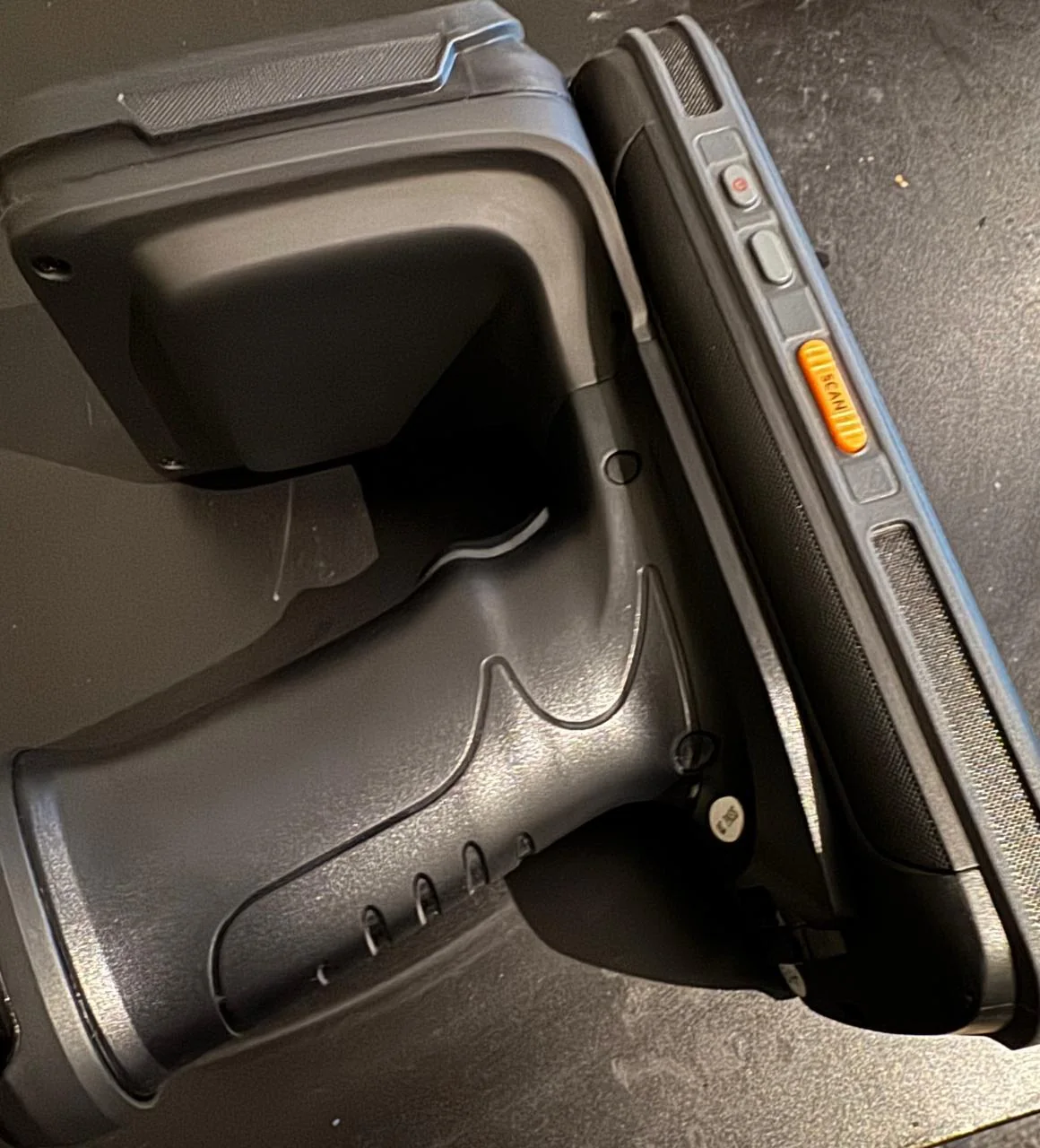
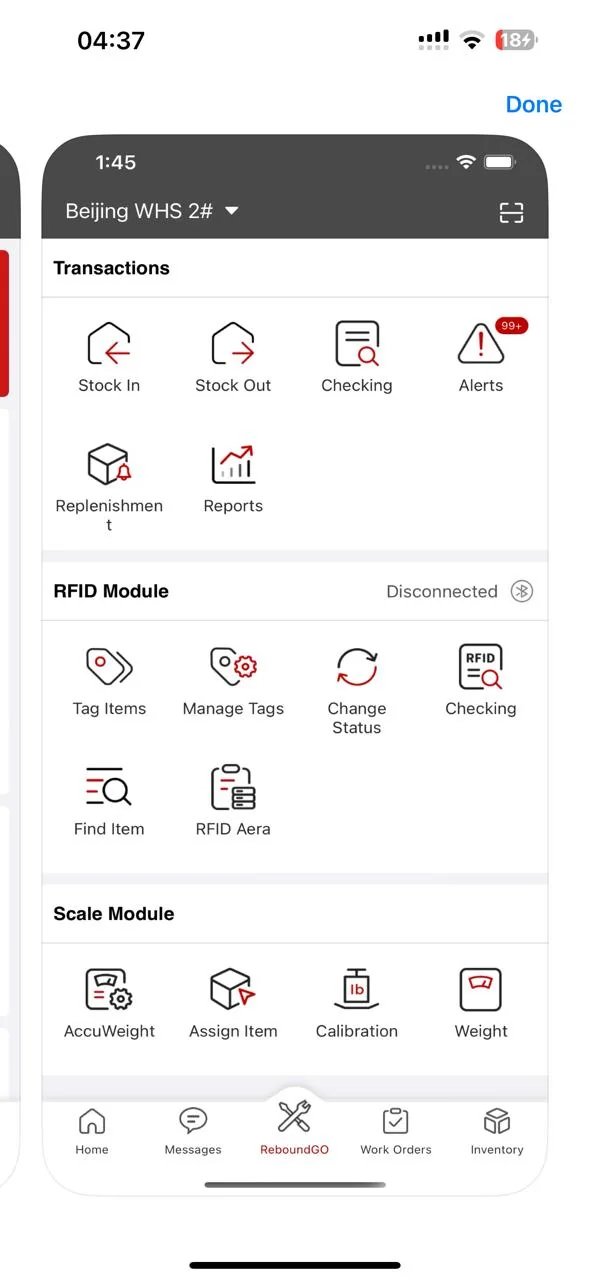
Reference architecture
The reference architecture for RFID Handheld Misses Tagged Items: Diagnosis and Tuning separates process definition, physical or comparison evidence, event/data controls and the system of record.
| Layer | What it contains |
|---|---|
| Process layer | Business question, asset population, user action and acceptance outcome. |
| Technology layer | Tags, readers, antennas, devices, network or comparison criteria selected for the environment. |
| Event and data layer | Filtering, identity, confidence, timestamps, exceptions and audit history. |
| Operations layer | Security, monitoring, training, support, lifecycle and change control. |
Deployment options: Deploy on-premise, edge or UAE-region private cloud according to connectivity, security, data residency and operating requirements.
Key capabilities
Integrations
The output should remain connected to the system of record, operational workflow and evidence trail; a technology observation is not a business transaction by itself.
| System | Integration point & data exchanged | Direction |
|---|---|---|
| ERP/WMS/EAM | Connect validated observations to the system that owns the business transaction. → Handheld RFID Readers for Inventory, Audits and Field Teams | bi-directional |
| Middleware/API | Buffer, filter, reconcile and expose events through controlled interfaces. → RFID Read Accuracy: Missed Reads, Metal & Liquids | bi-directional |
| GIS/BI | Expose approved location, exception and performance data for decision support. → RFID Troubleshooting: Offline Readers, Missed Reads and Over-Reads | bi-directional |
Industry use cases
Warehouse cycle counts
Fast counts with a controlled exception list.
Field assets
Mobile verification where connectivity can be intermittent.
Libraries and uniforms
Dense collections with tag orientation and handling constraints.
UAE & GCC considerations
For UAE and GCC projects, confirm regional radio configuration, data residency, Arabic/English operations, network segmentation, local support expectations, procurement evidence and handover obligations before final selection.
Implementation approach
- 1Define Confirm the RFID handheld missed-read diagnosis, owner, asset population, environment and acceptance outcome.
- 2Baseline Record current process time, errors, exceptions, materials, systems and support constraints.
- 3Design Select the physical, event, integration and security controls that answer the defined question.
- 4Test Use representative assets and users with a written test matrix and evidence capture.
- 5Handover Document configuration, limitations, training, support ownership and the next commercial step.
Security & deployment
Use least-privilege accounts, segmented device networks, protected credentials, auditable changes and controlled configuration backups. Keep assumptions, evidence and exceptions available to the operating owner.
Limitations & prerequisites
- A guide or calculator cannot replace a representative site test.
- Results depend on asset material, geometry, process discipline and system configuration.
- Vendor model status, regional availability and firmware must be checked before quotation.
- A technology result does not prove a business transaction until identity and integration rules are validated.
Decision view for RFID Handheld Misses Tagged Items: Diagnosis and Tuning
The correct choice depends on the operating question, environment and lifecycle—not on one headline specification.
| Decision | Starting point | Validation needed |
|---|---|---|
| Business outcome | Define the event, decision or comparison | Owner-approved acceptance case |
| Environment | Classify material, movement, coverage and constraints | Representative test |
| Integration | Keep the system of record explicit | Trace one event end to end |
| Commercial step | Preliminary recommendation | Survey, PoC, BoQ or quotation |
Treat every recommendation as preliminary until the assumptions and evidence are reviewed together.
FAQ
Confirm the reader is connected, the region and mode are correct, and a known-good tag is detected.
The antenna coupling and tag mounting may be orientation-sensitive, especially near metal or liquid.
It can address known defects, but update only after capturing the baseline and validating application compatibility.
Filtering, asset matching, duplicate suppression, network delay or application permissions may be blocking the display.
Use a representative sample covering normal, difficult and expected-negative cases rather than relying on one tag.
Model, firmware, region, tag SKU, distance, orientation, environment, app version, logs and a reproducible test sequence.
Need help with the next RFID decision?
Share the process, assets, site and target systems. We will identify the evidence needed for a survey, PoC, BoQ or quotation.
Request an RFID AssessmentRFID Asset Management System
Swedish Technology supplies the complete RFID stack — UHF tags, handheld and fixed readers, gates, antennas, printers and the asset management platform — with the integration and RF engineering behind it.
Request RFID Solution PricingSources & evidence
- GS1 RFID UHF air interface — Standards context for UHF RFID terminology.
- GS1 EPCIS — Event-data and visibility context.
- NIST SP 800-98 — RFID security and privacy considerations.
Vendor and product names are trademarks of their respective owners; references are for technical context and do not imply partnership, certification or endorsement unless stated on the vendor's official pages.