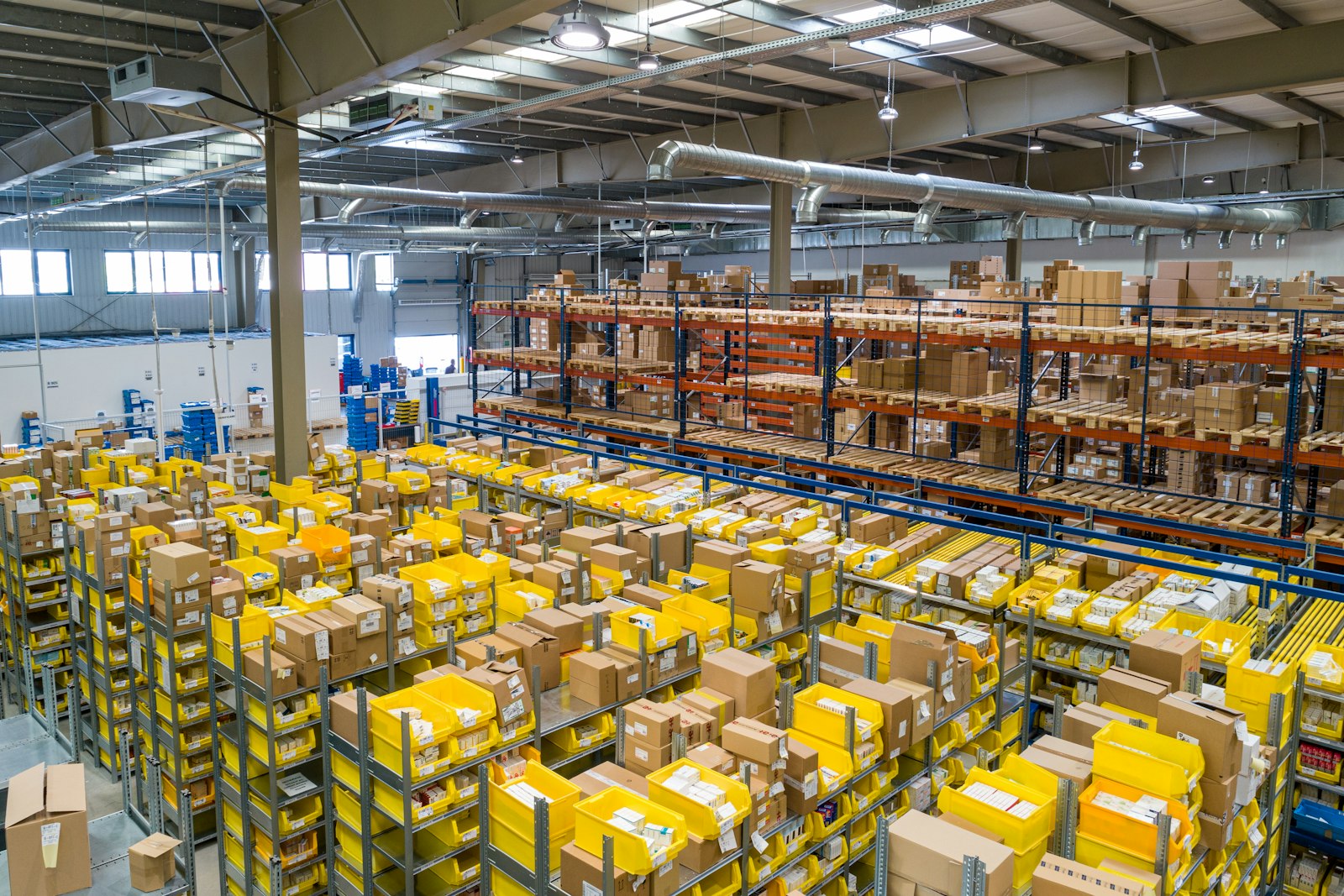
RFID Solutions in the UAE: Tags, Readers, Gates and Software
RFID (radio frequency identification) identifies tagged items by radio, without line of sight, so many items can be read in seconds. Swedish Technology designs and delivers complete RFID systems in the UAE: tag selection, handheld, fixed and gate readers, printers and encoders, middleware, software and integration with ERP, WMS, EAM and GIS platforms, validated through a site survey and pilot.
Key facts
- Passive UHF RFID (RAIN, 860–960 MHz) typically reads from a few centimetres to around 10 metres, depending on tag, reader power and environment.
- HF and NFC (13.56 MHz) read at a few centimetres, suited to deliberate one-at-a-time interactions such as access or authentication.
- UHF readers use anti-collision protocols (EPC Gen2 / ISO 18000-63) to inventory hundreds of tags per second.
- Metal detunes standard tags; on-metal tags use a spacer or ground-plane design to read reliably when mounted directly on metal.
- Liquids and human bodies absorb UHF energy, so tag placement often matters more than reader power.
- Read rate is a measured outcome of tag, placement, antenna geometry and settings, not a fixed specification of a reader.
In short
This page is the decision guide for RFID as a category: which tags, readers and software fit which job, how to prove performance before rollout, and what drives cost. For our packaged RFID asset management platform, see the asset management product page linked below.
Common causes of missed reads
Missed reads rarely come from a faulty reader. They usually trace back to one of the following, and most are found during a survey or pilot.
Tag orientation
Linear antennas and some tag designs read poorly at certain angles, so orientation should be controlled or circular-polarised antennas used.
Detuning and shadowing
Metal, liquids and dense stacks shift tag performance. Items packed tightly or tags overlapping each other shadow one another.
Reader settings
Power, session, target and search mode affect whether tags respond once or repeatedly; the wrong session can hide tags on a second pass.
Reflections and interference
Metal shelving and doors create dead spots and phantom reads, and nearby readers without coordinated settings can interfere.
Speed and dwell time
Items moving quickly through a narrow field, or a handheld moved too fast, may not stay in the field long enough.
Damaged or unencoded tags
Tags crushed, peeled or never encoded correctly at the printer will not match records. Verification at encoding catches most of these.
Considerations for UAE sites
Heat and sunlight affect adhesives, label face stock and tag housings in outdoor yards and unconditioned stores. Specify temperature and UV ratings, and consider mechanical fixing rather than adhesive for outdoor assets.
Many sites are metal-dense, with racking, steel doors, plant and containers. This favours on-metal tags and careful antenna placement over higher reader power.
Outdoor yards and ports need weather-rated readers, enclosures and cabling, with power and network planned during the survey.
Labels often need bilingual Arabic and English text alongside the asset number and barcode, which affects label size and printer choice.
Readers operate in regulated frequency bands, and data hosting may be subject to entity policy; compliance with TDRA, data residency or sector requirements depends on project configuration and approvals.
Integrating RFID with enterprise systems
The ERP usually remains the system of record. RFID supplies verified physical evidence; the integration decides which events update records automatically and which go to a person for approval.
SAP
Asset master data in; count results, transfers and discrepancies out to SAP asset accounting or EWM/WM.
Oracle
Fixed asset and inventory records synchronised; verification results and location changes posted back.
Odoo
Stock moves, receipts and deliveries confirmed from dock-door or handheld reads.
IBM Maximo
Asset and work order context; tagged equipment verified during maintenance and inspection rounds.
WMS
Receiving, put-away, picking and dispatch confirmed against RFID reads at dock doors and handhelds.
ArcGIS
Read-point and zone events shown on maps and floor plans for site-wide asset visibility.
Hosting, security and data
RFID data can be hosted on-premise, on a private cloud or on a UAE-hosted cloud, depending on entity policy. Readers and middleware should sit on a segmented network with role-based access to the application and audit logs for changes to asset records. Requirements such as data residency, NESA/IA or PDPL depend on project configuration and approvals.
Key components
On-metal tags
Hard or flexible tags designed to read on metal surfaces such as equipment, racks, cylinders and tools; size trades off against read range.
Cable-tie and hang tags
Attach to pipes, cables, bags and items without a flat surface; useful where adhesive will not hold.
Rugged and high-temperature tags
Encapsulated tags rated for heat, chemicals, impact or outdoor UV exposure, for plant, yards and process areas.
Flexible IT labels
Thin printable inlays or flexible on-metal labels for laptops and IT equipment, often combined with a printed barcode and asset number.
Windshield and tamper-evident tags
Vehicle tags that break if removed, preventing transfer between vehicles; used for gate and parking control.
Laundry tags
Textile tags that withstand washing, pressing and industrial drying, sewn or heat-sealed into garments and linen.
Handheld readers
Mobile computers or sleds for audits, searching and exceptions; read range is typically a few metres and depends on operator technique.
Fixed readers and antennas
Mounted at doors, shelves, conveyors or dock doors for automatic reads; usually two to eight antenna ports per reader.
Gates and portals
Paired antennas framing a doorway to detect items passing through; direction is inferred from antenna sequence or added sensors.
Overhead readers
Ceiling-mounted array readers covering a zone, estimating tag location and movement without floor-level infrastructure.
Printers and encoders
RFID label printers print and encode tags in one pass and void labels that fail verification; desktop and industrial models exist.
Middleware
Filters raw reads, removes duplicates, applies zone and direction logic, and manages reader configuration, firmware and health.
Application software
Asset registers, inventory counts, check-in and check-out, alerts, dashboards and reports, delivered on-premise or on private or UAE-hosted cloud.
Where this is used in the UAE and the GCC
Fixed assets
Furniture, equipment and plant tagged against the asset register and verified by handheld audits, with exceptions sent to finance.
IT assets
Laptops, monitors, servers and network gear tagged with flexible or on-metal labels; data-centre racks audited without opening each cabinet.
Tools and equipment
Tool cribs and workshops track check-out and return, and calibration-due items are flagged before use.
Files and library items
Document files, archive boxes and books located on shelves with handheld search mode; issue and return recorded at desks or gates.
Warehouse inventory
Cartons, pallets and returnable containers counted by handheld or verified at dock doors to reconcile receipts and dispatches with the WMS.
Retail
Item-level tagging for cycle counts, replenishment from backroom to shop floor and exit monitoring.
Vehicles and yards
Windshield or headlamp tags with long-range readers automate gate entry and record vehicle and trailer presence in yards and depots.
Laundry and uniforms
Washable, heat-resistant tags track garments and linen through wash cycles, counting soiled and clean batches without manual sorting.
Events and access
Wristbands and badges for accreditation, zone access and attendance counts at exhibitions and venues.
How a project runs
Assess
Define items, processes, count frequency and success measures. You receive a scoped requirement and an agreed list of use cases.
Site survey
Walk-through of doors, shelves, racks and outdoor areas, with test reads on sample items and RF noise checks. You receive tag and reader recommendations with mounting positions.
Design
Read zones, antenna layout, tag numbering, data model and integration flows are specified. You receive a design and bill of quantities.
Pilot / PoC
A representative area is tagged and measured against agreed acceptance criteria. You receive measured results before committing to rollout.
Deploy
Tagging, installation, tuning and user training, phased by site or zone. You receive commissioning records and trained users.
Integrate
Event flows connected to ERP, WMS or EAM and tested with real data. You receive tested interfaces and reconciliation reports.
Operate and support
Device monitoring, firmware updates, re-tuning after layout changes and help with tag replacement. You receive a stable system as the site changes.
UHF RFID vs HF/NFC vs active RFID vs BLE vs barcode
| Technology/option | Best fit when… | Limitations | Typical environment |
|---|---|---|---|
| Passive UHF RFID | You need fast bulk counts or automatic reads at doors and gates with low-cost tags. | Sensitive to metal and liquids without the right tag; gives presence at read points, not continuous location. | Warehouses, offices, IT rooms, libraries, retail, laundries |
| HF / NFC | Reads must be deliberate and close, such as access, authentication or phone-based tap interactions. | Range of a few centimetres; not suited to bulk or walk-through reads. | Access control, libraries, product authentication, patient or staff ID |
| Active RFID | Long-range detection of high-value items or vehicles is needed, and battery-powered tags are acceptable. | Higher tag cost, battery replacement, larger tags. | Yards, ports, containers, heavy equipment |
| BLE | Room-level or zone-level continuous location is needed, often with an existing beacon or gateway network. | Battery tags, lower count density than UHF, accuracy depends on infrastructure density. | Hospitals, offices, campuses, indoor RTLS |
| Barcode / QR | Volumes are low, items are scanned one at a time anyway, or budgets are tight. | Line of sight required, one scan per item, labels wear and get covered. | Low-volume stores, documents, labels alongside RFID as a fallback |
Risks and common mistakes
Choosing tags from a catalogue without testing
Test candidate tags on the actual items and surfaces during the survey before ordering volume.
Standard labels on metal or liquid-filled items
Use on-metal tags, spacers or hang tags, and test placement on each item type.
Gates read items standing nearby
Shape the read zone with antenna angle, power and shielding, and test stray reads explicitly.
Poor tag placement
Define a placement guide per item type so every tag sits in the same, readable position.
Dirty master data
Clean the asset register or item master before tagging, otherwise RFID confirms the wrong records quickly.
Treating RFID as continuous tracking
If you need live location, combine RFID read points with BLE or UWB RTLS.
What to check before you commit
- An item list by type, with quantities, materials and photos of typical items.
- A clean asset register or item master with unique identifiers.
- Floor plans showing doors, docks, racks and the areas to be covered.
- The processes RFID should support: counts, check-out, receiving, dispatch or exit control.
- Target count frequency and how exceptions will be handled and by whom.
- Which systems must receive data and the owners of those systems.
- Hosting, security and data residency requirements from IT and information security.
- Label content requirements, including Arabic and English text and existing barcodes.
- Power and network availability at proposed reader locations.
- Agreed pilot acceptance criteria and who signs them off.
Pilot / proof of concept
A pilot covers a small but representative sample: the hardest item types, the busiest door and the most metal-dense area. It typically runs 2–6 weeks depending on scope and integration depth.
Acceptance criteria are agreed in writing before tags are fixed, measured on a known population of items and repeated across several runs so results are not a single lucky pass.
Handheld count read rate
Tags read in a sweep divided by known tagged items in the area, over repeated sweeps by different operators.
Gate detection rate
Tagged items carried through a gate in agreed ways, counted against detections, including stacked or bagged items.
Stray reads
Items outside the zone that are wrongly reported inside, measured with tags placed near but outside the read area.
Direction accuracy
Correct in or out classification for gate passes, logged against observed movements.
Count time
Time to complete a count of a defined area compared with the current barcode or manual method.
Integration correctness
Events posted to the target system checked record by record against the pilot log.
What drives the cost
RFID cost depends far more on the environment and process than on the software licence. A pilot is usually the most reliable way to fix quantities and tag types before budgeting a rollout.
Tag type and volume
Paper inlays, on-metal, rugged and laundry tags differ widely in unit cost, and volume changes pricing.
Tagging labour
Applying, encoding and linking tags to records can be a large share of effort, especially for existing assets.
Number of read points
Each gate, dock door or zone adds readers, antennas, cabling, mounting and tuning.
Handheld count
Depends on how many teams count in parallel and how often.
Environment
Outdoor, high-temperature or hazardous areas need rated hardware and enclosures.
Integration scope
Two-way ERP or WMS integration with approval workflows costs more than file export.
Hosting and support
On-premise, private cloud or hosted deployment, and the level of ongoing support, affect total cost.
Questions buyers ask
What is an RFID system and how does it work?
An RFID system uses tags with a chip and antenna, and readers that power and query them by radio. Passive UHF tags have no battery; the reader's signal energises the tag, which replies with its identifier. Middleware filters these reads into events, and software links each identifier to an asset or item record. Because no line of sight is needed, many items can be read in one sweep or as they pass through a doorway.
How far can UHF RFID tags be read?
Passive UHF tags are typically read from a few centimetres to around 10 metres, and some large tags further in open conditions. Actual range depends on tag size and design, reader power, antenna type, orientation and what the tag is mounted on. Metal and liquids reduce range unless suitable tags are used. Range should be measured on real items during a site survey rather than taken from datasheets.
Can RFID tags work on metal assets?
Yes, with on-metal tags. Standard labels detune when placed on metal, but on-metal tags use a spacer or ground-plane design that turns the metal into part of the antenna. They come as hard tags, flexible labels and printable labels. Size affects range, so small tags for laptops read at shorter distances than larger tags for plant and racks.
What is the difference between handheld and fixed RFID readers?
Handheld readers are carried by staff for audits, searches and ad hoc counts; they are flexible and need no installation. Fixed readers are mounted at doors, docks, shelves or ceilings and read automatically as items pass or sit in a zone. Many projects use both: handhelds for periodic counts and fixed readers or gates at key movement points.
Is RFID better than barcode for asset tracking?
RFID is faster for counts because it reads many items without line of sight, and it enables automatic reads at gates. Barcodes are cheaper per label and adequate when volumes are low or items are scanned individually anyway. Many projects print a barcode on the RFID label as a fallback, so both methods remain available.
Can RFID show the exact location of an asset?
Passive RFID shows where an item was last read: a gate, a zone or the room where a handheld audit took place. Overhead readers can estimate location within a zone. For continuous, real-time location, RTLS technologies such as BLE or UWB are usually needed, and they can be combined with RFID in one system.
What read rate should an RFID pilot achieve?
There is no universal figure; the target depends on the use case and item types. The pilot should agree acceptance criteria in advance, such as handheld count read rate, gate detection rate and stray reads, and measure them on a known population over repeated runs. If results fall short, tag choice, placement or zone design is adjusted and retested.
Can RFID integrate with SAP, Oracle or Odoo?
Yes. RFID software typically exchanges data through APIs, middleware or scheduled file transfers. Master data flows from the ERP, and verified events such as counts, transfers and receipts flow back. The key design decision is which events update records automatically and which require human approval.
What is the difference between this page and your RFID asset management product?
This page covers RFID as a technology choice: tags, readers, gates, middleware, integration and performance validation. The asset management product page describes our RFID asset management platform. For asset verification against a register, start there; for inventory, warehouse, laundry or vehicle use cases, use this page to scope the system.
RFID Asset Tracking – UAE Buyer Guide
A downloadable buyer's guide with a structured requirements template and evaluation questions for comparing RFID proposals.
Related solutions
- RFID asset management platform
- What is RFID
- What is RAIN RFID
- RFID vs barcode
- RFID vs BLE
- RFID vs barcode vs BLE vs UWB
- RFID on-metal tags
- High-temperature and harsh-environment RFID tags
- RFID gate system design and tuning
- RFID read accuracy and missed reads
- RFID site survey and PoC checklist
- RFID integration with SAP, Oracle, Odoo and Maximo
- RFID middleware and device management
- RFID smart warehouse and inventory automation
- RFID fixed readers, smart gates and handhelds
- Octopus WMS
- RTLS solutions
- Request a quote
Start with a site survey
Share your item types, floor plans and target processes. We will test tags on your real items, propose read points and define pilot acceptance criteria before any rollout.
Request a site survey Request pricing or a BoQ Browse the Resource Centre