AI Video Analytics and CCTV AI in the UAE
AI video analytics watches CCTV feeds continuously and flags the moments that need a person: an intrusion at night, a worker without a helmet, a crowd building at a gate, a vehicle on a watchlist. Swedish Technology adds these analytics to the cameras you already have, routes alerts to your control room, and keeps the video processing on your own servers where required.
Request CCTV AI Demonstration · Talk to an Engineer
What it detects
| Category | Examples |
|---|---|
| Perimeter and intrusion | line crossing, zone intrusion, loitering, after-hours presence |
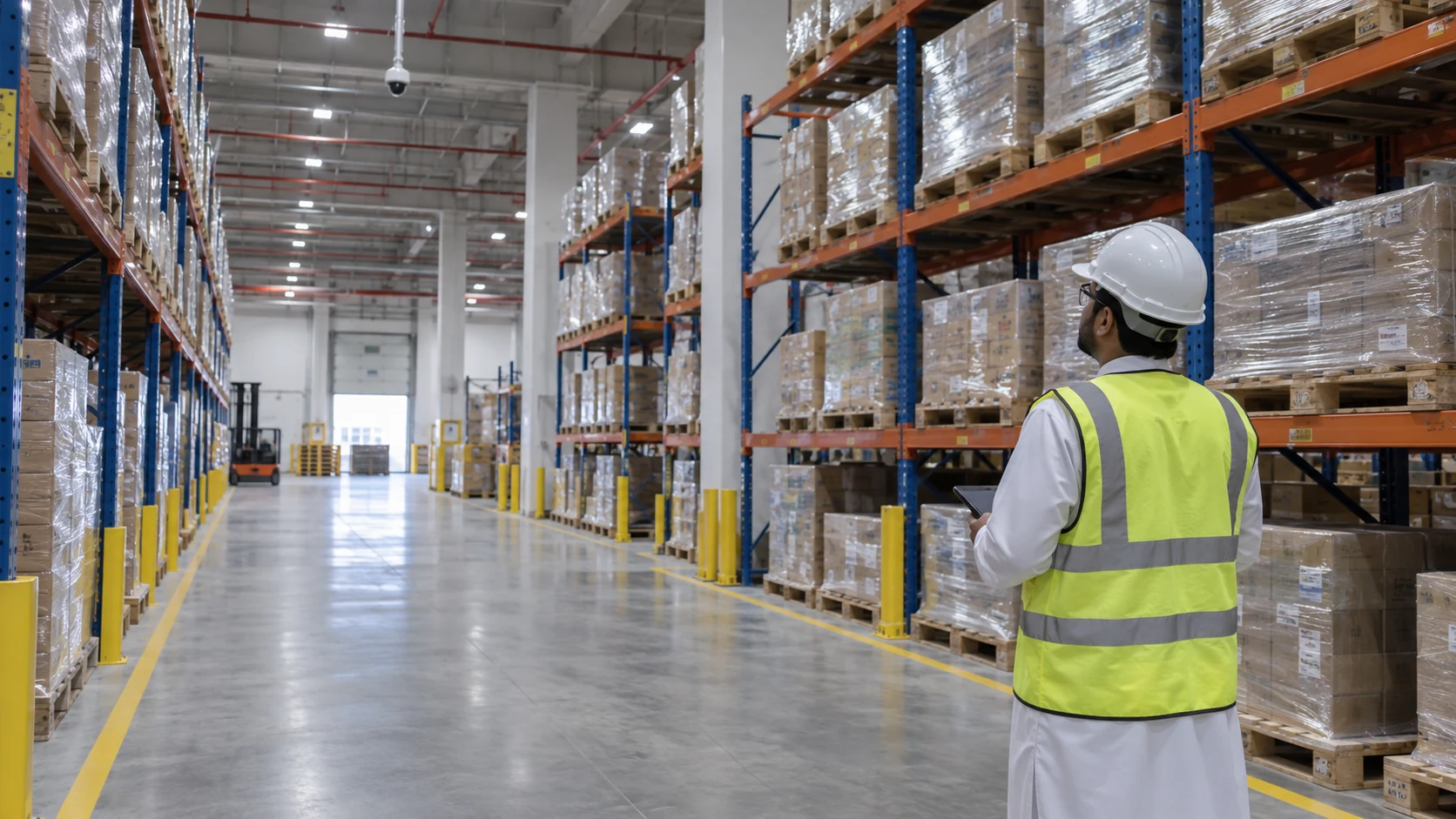
| Safety and HSE | PPE compliance (helmet, vest), falls, forklift-pedestrian proximity, smoke and fire |
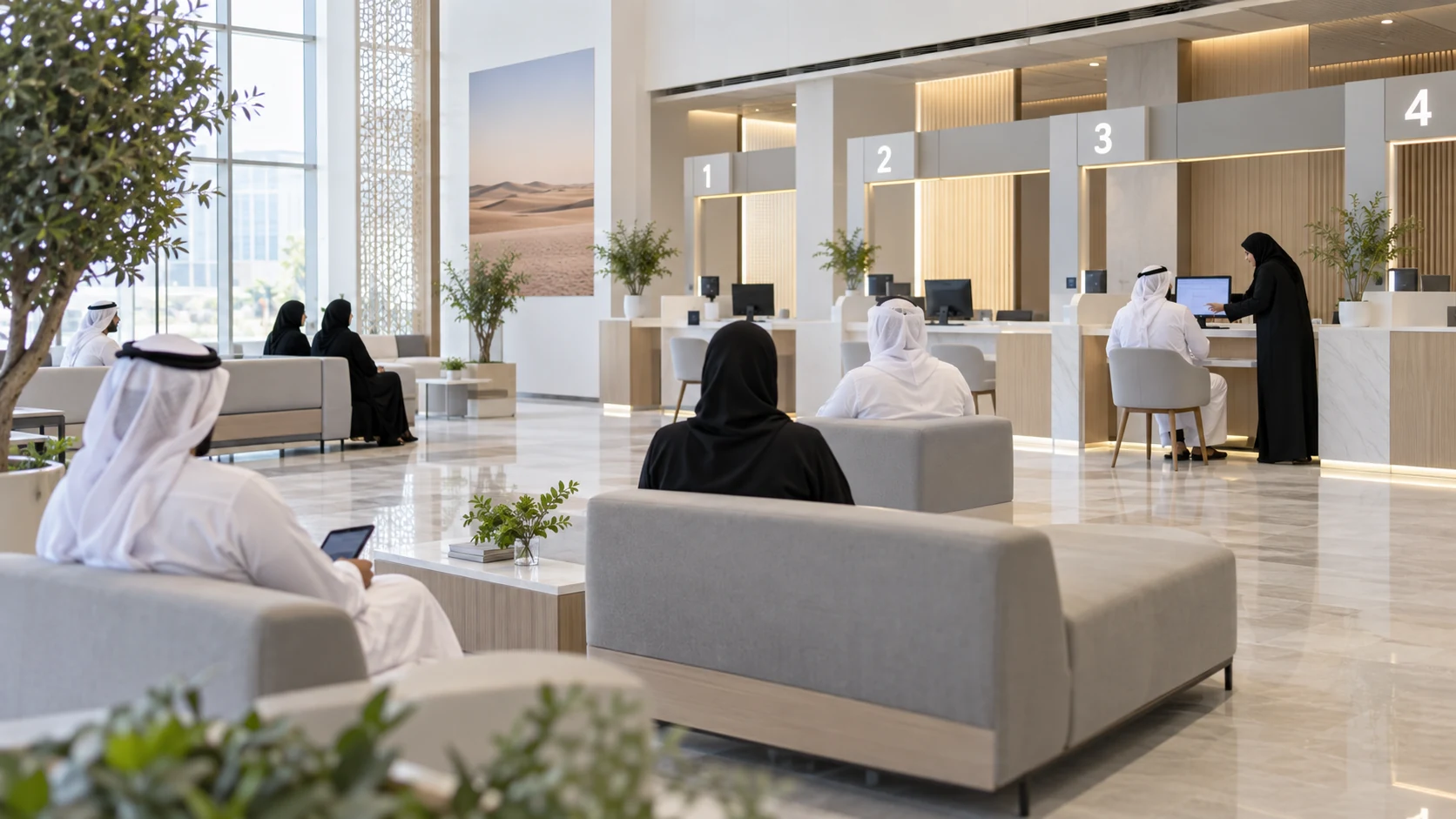
| Crowds and venues | people counting, queue length, density, abnormal behaviour |
| Vehicles | automatic number plate recognition including Arabic plates, wrong-way driving, parking violations |
| People | face recognition against watchlists, where permitted by policy and law |
| Operations | camera health (blocked, moved, out of focus), dwell time, footfall |
Detection rules are set per camera and per zone, so a loading bay and a lobby are not judged by the same rule.
How it works with the cameras you have
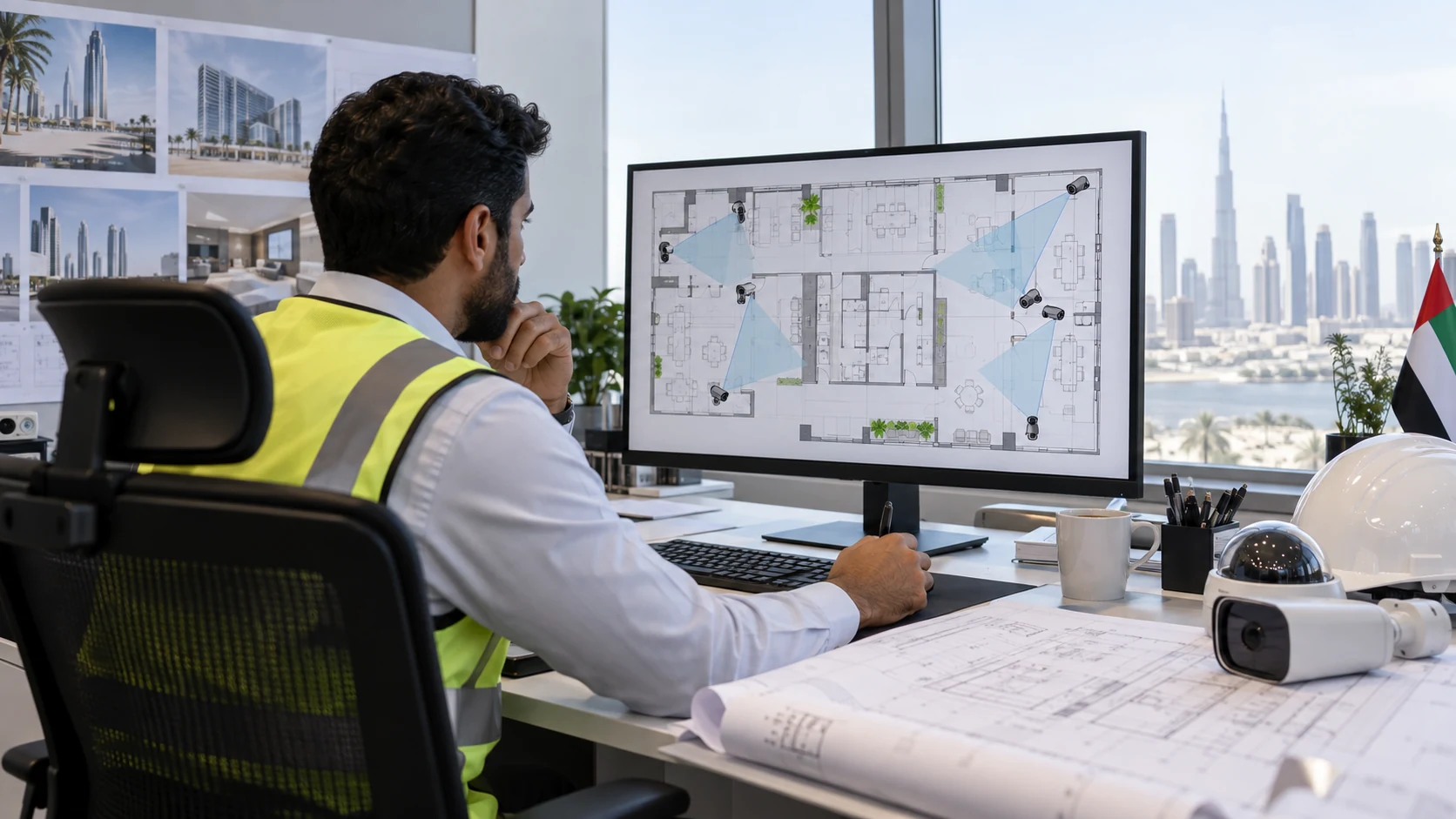
Most sites do not need new cameras. Analytics run on existing IP cameras through the video management system (VMS) or directly from the camera streams (RTSP/ONVIF). Where a camera’s angle, resolution or lighting cannot support a use case, such as reading plates at night, the survey says so before anything is bought.
Edge or server. Analytics can run on edge devices near the cameras (lower bandwidth, faster response) or on GPU servers in your data centre (central management, heavier models). Most deployments use both.
From alert to response
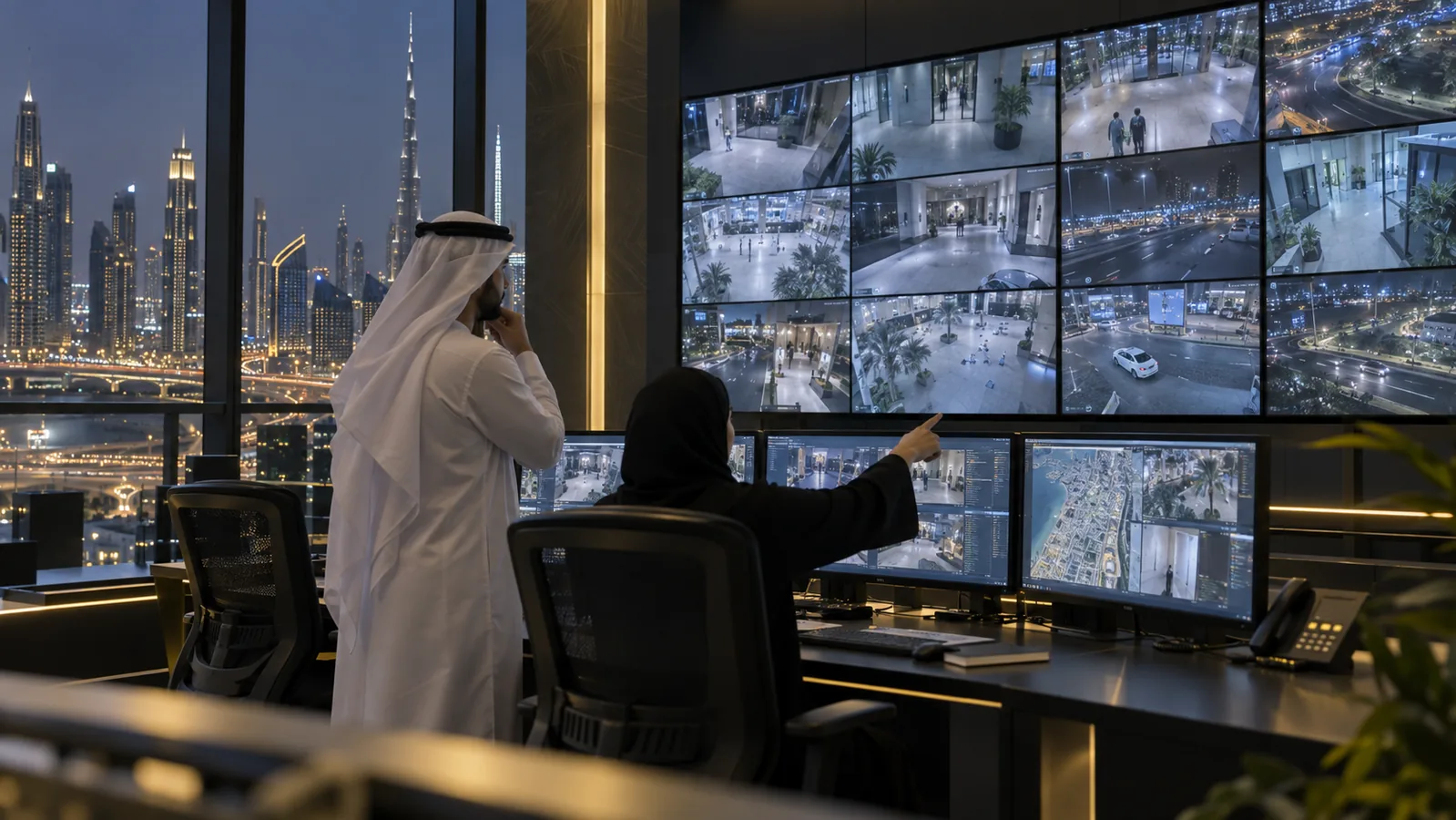
Detections become events with a snapshot and a short clip. Events are ranked and deduplicated so operators see a short list instead of hundreds of raw alarms. They are sent to the control-room screen and mobile apps, and can trigger access control, PA or incident workflows. Every event keeps an audit trail: who saw it, who acknowledged it, what was done.
The platform: RAQEEB
The analytics platform Swedish Technology offers is RAQEEB. It combines video analytics, GIS maps of cameras and alerts, incident management and dashboards, and integrates with existing VMS, access control and command-and-control rooms.
Regulation and data protection in the UAE
CCTV systems in Dubai must meet SIRA requirements for camera coverage, image quality, storage and retention. Swedish Technology designs analytics around those requirements and works alongside your SIRA-approved installer, or supports your design review before submission. We are not a SIRA-approved installer ourselves; the approved company remains responsible for the installation and its approval.
Face recognition and personal data are governed by UAE data-protection law and your sector’s rules. We deploy on-premises when video must not leave your network, and configure retention, masking and access roles to your policy.
Deployment options
| Option | Suits |
|---|---|
| On-premises (GPU servers in your data centre) | government, critical infrastructure, sites where video cannot leave the network |
| Edge + central | multi-site estates, remote sites with limited bandwidth |
| Hybrid / private cloud | commercial estates where policy allows |
How a project runs
- Camera and use-case survey: which cameras, which events, what the operator should do.
- Proof of concept on a limited set of cameras and two or three use cases, measured on real footage (detections, false alarms per day).
- Rollout: remaining cameras, alert routing, integration, operator training.
- Tuning and support: rules and thresholds adjusted as the site changes.
Related
RAQEEB AI surveillance · AI video safety monitoring · AI PPE detection · CCTV compliance and design review · VMS upgrade and integration · Private on-premise AI · Computer vision solutions
Questions buyers ask
Can AI analytics work with our existing CCTV cameras? Usually yes, through the VMS or directly from IP camera streams. Some use cases need specific camera angles or resolution; the survey identifies them.
How many false alarms should we expect? It depends on the scene, lighting and rule. False alarms per camera per day are measured in the proof of concept and reduced with zone rules and thresholds before rollout.
Does it read Arabic number plates? Yes. Plate recognition supports UAE plates, including Arabic characters, subject to camera placement and lighting.
Can the video stay on our premises? Yes. Analytics can run entirely on servers inside your network.
Is face recognition allowed? It depends on your sector, the purpose and applicable law. We configure it only where your policy permits it, with access controls and retention limits.
Can alerts go to our existing control room? Yes. Alerts integrate with VMS, command-and-control software, mobile apps and access control.
Which platform do you use for CCTV AI? RAQEEB, Swedish Technology’s AI surveillance and smart-inspection platform, available now in the UAE. It runs on-premise or at the edge and is supported from our Dubai office in Arabic, English and French. See RAQEEB.
Request a CCTV AI demonstration
Book a site survey or demo, or contact our engineers.
Solution scenarios
How this typically works for a specific kind of organisation. These are scenarios, not client case studies. See all solution scenarios.