
An ANPR residential gate system reads a vehicle's number plate as it approaches, matches it against a whitelist of resident and permitted vehicles, and lifts the barrier without the driver stopping. Accuracy is a function of camera geometry, illumination, approach speed and plate condition rather than of software alone — which is why the read rate is measured at the specific gate rather than quoted from a datasheet.
The number that matters is not accuracy in a laboratory. It is how many residents get through without stopping at your gate, at night, in July.
- Read rate engineered per lane, then measured
- All UAE emirate formats and category codes
- Barrier safety and fail-open behaviour designed in
- A working exception path for every failed read
Why ANPR gates disappoint after installation
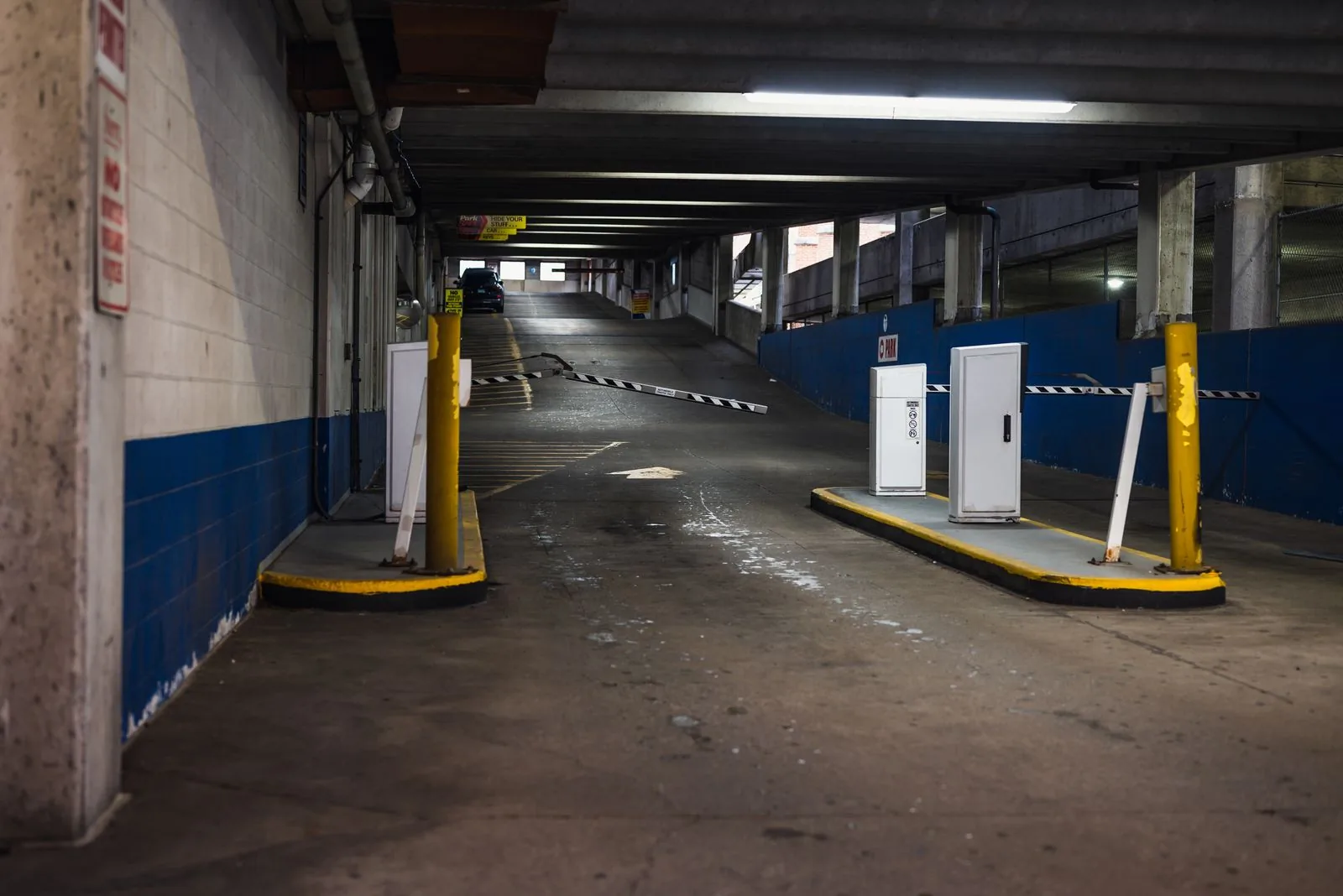
ANPR is specified from a datasheet and delivered into a physical situation the datasheet knew nothing about. The camera is mounted where there was a convenient pole rather than where the geometry works, so it sees plates at forty degrees. There is no dedicated illumination, so the read rate collapses after sunset. The approach is straight and fast, so the plate is in frame for a fraction of the time the model needs. The result is a gate that works in the commissioning demonstration and irritates residents by the second week.
The second failure is the exception path. Every ANPR installation will fail to read some plates — damaged, obscured by a tow bar, foreign, or simply dirty. If the only fallback is the driver reversing or calling the guard, then a 90% read rate means one resident in ten is inconvenienced every single day, and they will judge the system by that experience rather than by the ninety. The third is safety: a barrier integrated without proper safety loops and fail-open behaviour is a physical hazard and, in a power cut, a trap.
- Camera position is decided by available poles rather than by read geometry.
- No dedicated IR illumination means the read rate falls away after dark.
- A fast, straight approach gives the camera too few usable frames.
- Without a good exception path, a 90% read rate feels like a broken gate.
- A barrier without safety loops and fail-open behaviour is a hazard, not a control.
Solution overview
Swedish Technology engineers the lane before selecting a camera. The survey establishes approach angle, distance, speed and existing lighting, and from those the camera position, lens, shutter behaviour and dedicated infrared illumination are specified. Where the approach is too fast or too oblique, the answer is a speed hump, a lane narrowing or a repositioned trigger — civil work that costs less than a permanently poor read rate.
Recognition is configured for UAE conditions: all emirate formats and category codes, plate styles including customised and older formats, and a confidence threshold tuned so a low-confidence read goes to the exception path rather than opening the barrier for the wrong vehicle. That exception path is designed as a first-class feature — an intercom to a manned gate, a resident app confirmation or a fallback credential — so a failed read costs a driver seconds instead of a reversing manoeuvre. Barrier integration includes safety loops and a defined fail-open state.
How the solution works
- 1Detect approach A trigger loop, radar or continuous detection tells the camera a vehicle is approaching, so it captures across the useful window rather than on a single frame.
- 2Capture the plate Multiple frames under controlled illumination, with shutter and gain set for a moving plate rather than for a pleasant-looking scene.
- 3Recognise and score The plate is read across frames with emirate and category, and the result carries a confidence score rather than being treated as certain.
- 4Match and decide A high-confidence match against the resident or permitted-visitor whitelist opens the barrier. Low confidence or no match routes to the exception path.
- 5Exception handling Intercom to the guard, resident app confirmation or fallback credential — designed so a failed read costs seconds, because the exception is what residents remember.
- 6Record and learn Every read, decision and exception is logged with its image, which is what makes read-rate measurement and later tuning possible rather than anecdotal.
Key capabilities

Reference architecture
Recognition and the barrier decision run at the gate. A plate read that depends on a cloud round trip is a plate read that fails when the link does, at the moment a resident is waiting.
Deployment options: Edge at the gate. Recognition, whitelist matching and barrier control all run locally with the whitelist cached, so the gate keeps working through a network outage and reconciles afterwards.
Hardware options
Every line here is decided by the lane survey. The most expensive camera in a bad position reads worse than a modest one in a good position.
| Device | Where it is used | Selection notes |
|---|---|---|
| ANPR camera with integrated IR | Entry and exit lanes | Dedicated infrared illumination is not optional in the UAE — headlight glare and low ambient light at night are what destroy read rates. Integrated IR keeps alignment fixed. |
| Trigger loop or radar | In the approach, ahead of the camera | Tells the camera when to capture so it uses the whole useful window. Continuous capture without a trigger wastes frames and misses fast approaches. |
| Boom barrier with safety loops | Vehicle lane | Safety loop under the boom, anti-drop protection and a defined fail-open state. This is a safety item first and an access item second. |
| Intercom or call point | Driver's reach at the barrier | The exception path made physical. Without it, a failed read means reversing — which is what residents will describe when asked about the system. |
| Gate edge controller | Gate cabinet | Runs recognition, holds the whitelist and drives the barrier so nothing time-critical depends on the community's internet link. |
Swedish Technology supplies and integrates ANPR equipment from established manufacturers; camera, lens and illumination are selected per lane from the survey rather than from a standard bundle.
AI capabilities
The recognition model is one part; the surrounding logic is what makes it usable.
- Multi-frame plate reading — Combines reads across several frames of the approach rather than trusting one image, which is the single largest practical improvement in real read rate.
- Emirate and category classification — Identifies emirate and category alongside the number, because two UAE plates can share a number and differ only by emirate or code — storing the number alone eventually matches the wrong vehicle.
- Confidence-based routing — Sends low-confidence reads to the exception path instead of opening the barrier, which is what prevents the failure mode nobody forgives: the wrong car being let in.
- Read-rate degradation detection — Watches each lane's rate against its own baseline and flags decline — usually a moved camera, a dirty lens or a failed IR illuminator — before residents start complaining.
Integrations
ANPR is a sensor. Its value is in what it feeds. These can be designed within project scope.
| System | Integration point & data exchanged | Direction |
|---|---|---|
| Residential visitor platform | An approved visitor's plate is added to the whitelist for their pass window automatically, so an expected guest drives straight in and the permission expires with the pass. → Residential Visitor Management System | bi-directional |
| Vehicle visitor management | Reads at entry and exit feed the vehicle record that produces dwell, overstay and enforcement evidence. → Vehicle Visitor Management System | outbound |
| Access control | Plate acts as a credential alongside cards and fobs in the installed system, so residents are not managed in two places. | bi-directional |
| Parking management | Plate-based entry linked to bay allocation and occupancy rather than a separate ticketing layer. → Smart Parking for Residential Communities | bi-directional |
| CCTV / VMS | Read images and barrier events bookmarked against the lane camera for investigation. → RAQEEB – AI Surveillance | bi-directional |
| Community management software | Resident vehicle records sourced from the community system so the whitelist is not a second list that drifts. | inbound |
The integrations above are designed and implemented within project scope using vendor APIs, webhooks or standard connectors. They do not imply partnership, certification or endorsement by the system owner unless stated on that vendor's official pages.
Dashboards & analytics
- Lane performance — Read rate per lane, split day and night, against the commissioned baseline — the number that tells you the system is still working.
- Exceptions — Failed and low-confidence reads with images, so recurring problem plates and recurring lane problems are distinguishable.
- Whitelist status — Active resident and visitor vehicles, expiring permissions and recently removed entries.
- Barrier health — Cycle counts, fault events, safety-loop activations and any fail-open occurrences with their cause.
Security & deployment
Recognition, whitelist matching and barrier control all run on the gate edge controller, so the gate operates through a network outage with a cached whitelist and reconciles afterwards. Barrier logic carries a defined fail-open state on power or controller failure, because a barrier that fails closed traps residents and blocks emergency access — that is the higher risk in a residential setting. Read images are retained under a defined period and access to them is logged, since a plate image is personal data in this context.
Data privacy
Plate recognition at a residential gate records the comings and goings of identifiable households, which makes it more privacy-sensitive than most access technology. The design position is that reads serve access control and the visitor record, not resident monitoring: resident vehicle movements are not profiled, and read images are retained for a short, defined period tied to dispute and enforcement needs.
Signage at the gate states, in Arabic and English, that plates are captured and why. Under UAE Federal Decree-Law No. 45 of 2021 the community operator is the controller. Where the installation falls under SIRA requirements in Dubai, those apply to the security elements and to who may operate them, and are confirmed at design stage. Plate data is not shared with third parties without a stated basis, and is not merged into marketing or analytics uses.
Industry use cases
UAE & GCC considerations
UAE plates are the specific technical challenge. Formats differ by emirate, categories are indicated by letters or numbers depending on the emirate, and older and customised plates remain in circulation. A model trained on European or North American plates will underperform here in ways that are invisible during a demonstration on a handful of vehicles, so coverage is validated against a real sample from the community's own traffic.
The environment is equally decisive. Very high ambient light and strong shadows during the day, dust on lenses, and heat inside camera housings all degrade performance over months rather than on day one — which is why continuous read-rate monitoring matters more here than in temperate climates. Night performance depends entirely on dedicated infrared illumination. In Dubai, security installations fall under SIRA, and equipment must meet applicable TDRA requirements where radio devices such as radar triggers are used.
Implementation approach
- 1Lane survey Approach angle, distance, speed, existing lighting, shadows through the day, mounting options and where a refused vehicle can turn around. This survey determines the achievable read rate more than any product choice.
- 2Feasibility and target An honest achievable read rate for that lane, and what civil work would be needed to improve it. Communities are better served by a realistic 92% than a promised 99%.
- 3Specification Camera, lens, illumination, trigger, barrier and controller specified for the lane, with the exception path designed at the same time rather than added later.
- 4Installation and calibration Aligned and tuned on site across day and night conditions, not commissioned at 11:00 on a clear morning.
- 5Read-rate baseline Measured over a representative period including night and weekend traffic. This figure becomes the reference for later degradation detection.
- 6Handover and monitoring Whitelist management handed to community staff, with continuous read-rate monitoring so decline is caught as a trend rather than as a complaint.
Why Swedish Technology
- We survey the lane and tell you the achievable read rate before you buy, including when it needs civil work.
- The exception path is designed as a feature, because that is the experience residents will judge the system by.
- Full UAE plate coverage validated against your own traffic, not a generic model.
- Barrier safety and fail-open behaviour are engineered in — a barrier that traps residents is a worse outcome than an unverified entry.
- Read rate is monitored continuously against the commissioned baseline, so degradation is a maintenance ticket rather than a complaint.
Limitations & prerequisites
- Realistic read rates at a well-engineered lane are typically 92–98% by day and lower at night without dedicated illumination. Higher figures quoted for an arbitrary gate are laboratory conditions.
- Damaged, obscured, dirty or foreign plates will not read reliably, which is why the exception path is a requirement rather than a nicety.
- Some approaches cannot be made to work without civil change. Where that is the case we will say so rather than install and hope.
- ANPR identifies a plate, not a driver, and is not an identity control — a whitelisted vehicle driven by anyone will be admitted.
- Motorcycles are materially harder: smaller, angled, rear-only plates. A community with high delivery-bike volume should not rely on ANPR for that traffic.
- References to SIRA, TDRA and PDPL obligations are general guidance, not legal advice.
FAQ
At a well-engineered lane, typically 92–98% by day, and materially lower at night without dedicated infrared illumination. Accuracy is a function of camera angle, distance, approach speed, lighting and plate condition rather than of the software alone, which is why we measure it at your gate rather than quote a datasheet.
Almost always because there is no dedicated infrared illumination and the camera is relying on ambient light and headlights. Headlight glare in particular washes out a plate. This is a hardware and positioning problem; no amount of software tuning fixes an image that does not contain a readable plate.
It should, and that has to be validated rather than assumed. Formats differ by emirate, category indicators differ, and older and customised plates remain in circulation. We validate coverage against a sample of the community's own traffic, and we retain the emirate and category as part of vehicle identity because two plates can share a number.
The vehicle goes to the exception path — an intercom to a manned gate, a confirmation from the resident app, or a fallback credential. This is designed as a first-class part of the system, because at a 95% read rate one vehicle in twenty uses it, and that is the experience residents will describe when asked about the gate.
They solve the problem differently. ANPR needs nothing in the vehicle and works for visitors, but depends on lane conditions. A windscreen RFID tag reads near-perfectly regardless of light or weather but only works for vehicles you have tagged. Many communities use tags for residents and ANPR for approved visitors.
The barrier follows its defined fail state, which in a residential setting should be fail-open. A barrier that fails closed traps residents inside and blocks emergency access, which is a greater risk than an unverified entry during an outage. This is agreed explicitly at design stage rather than left to the barrier's default.
Yes. When a resident approves a guest and provides a plate, it can be whitelisted for the pass window and removed automatically when the pass expires — so the guest drives straight in and nobody has to remember to revoke anything.
Poorly, relative to cars. Motorcycle plates are smaller, rear-only and often angled, so read rates are materially lower. A community with high delivery-bike volume should handle that traffic through a dedicated delivery process rather than relying on ANPR.
Discuss your site with an engineer
Tell us the venue, the expected visitor volume and the systems you already run. We reply with a technical view, a realistic scope and the next sensible step — a site survey, a working demonstration, or a full technical and commercial proposal.
Sources & evidence
- UAE Federal Decree-Law No. 45 of 2021 — Personal Data Protection Law — Governs collection, retention and cross-border transfer of visitor personal data in the UAE.
- Dubai SIRA — Security Industry Regulatory Agency — Regulates security systems and licensed security service providers in Dubai.
- TDRA — Telecommunications and Digital Government Regulatory Authority — Type-approval context where radar or other radio devices are used at the gate.
- UAE Government — vehicle registration and plates — Reference for UAE plate formats and emirate categories.
Vendor and product names are trademarks of their respective owners; references are for technical context and do not imply partnership, certification or endorsement.