
KeyCustody Cabinet | Hardware Product Concept
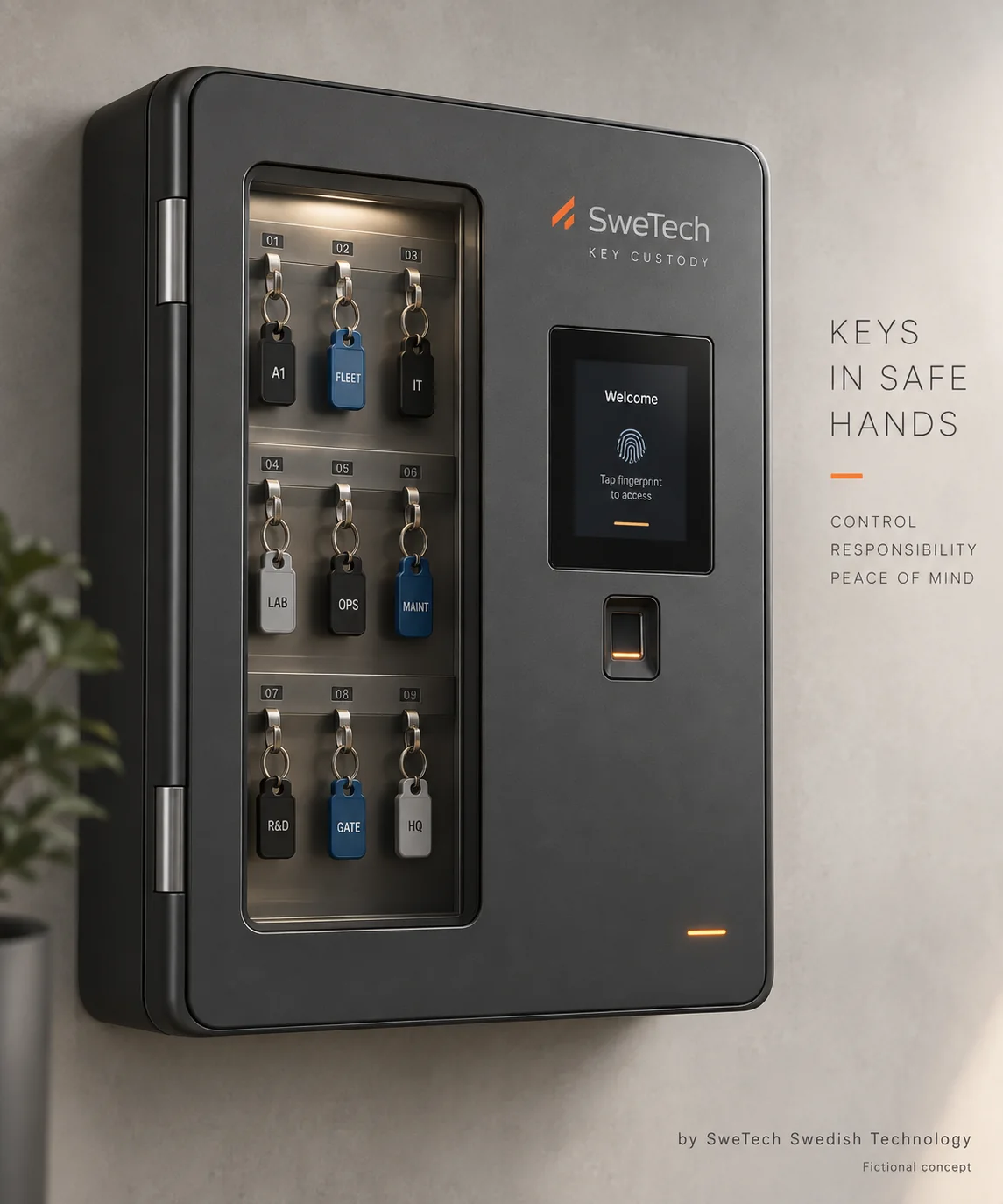
KeyCustody Cabinet
Cabinet assigns physical keys, records custody and predicts shortages during shift changes.
Designed for Security, fleet. Source profile: Idea / Research; feasibility: High; prototype complexity: Medium.
Project text and technical scope
Problem addressed
Current Facilities / Fleet workflows often depend on manual checks, disconnected devices and delayed evidence.
Product vision
Cabinet assigns physical keys, records custody and predicts shortages during shift changes.
Hardware platform
Electronic key cabinet + RFID key fobs + face/fingerprint reader
Sensors and inputs
Key ID, user, time, cabinet slot
AI and software
AI allocation and missing-key alerts
User workflow
Security, fleet use the device in-field; the system captures data, analyses it, requests human confirmation where needed and records the outcome.
Edge processing
Run latency/privacy-critical inference on device/edge; use server for fleet analytics, RAG, orchestration and reporting.
Connectivity
Ethernet/Wi-Fi
Mobile experience
Device pairing, live status, guided workflow, alerts, evidence review, offline sync and user actions.
Operations console
Fleet/device map, live events, health, incident queue, analytics, reports, configuration and audit history.
Safety and compliance
Biometric privacy and fallback access procedures.
Operational value
Cabinet + SaaS; value comes from measurable safety, traceability, downtime reduction or workflow automation.
Security and privacy
Secure device identity, encrypted transport/storage, RBAC, audit logs, minimum necessary personal data and configurable retention.
Commercial model
Cabinet + SaaS
Differentiation
Intelligent physical key governance.
Demo scenario
Show a realistic operator using KeyCustody Cabinet; capture sensor/device event → AI analysis → alert/recommendation → human action → report.