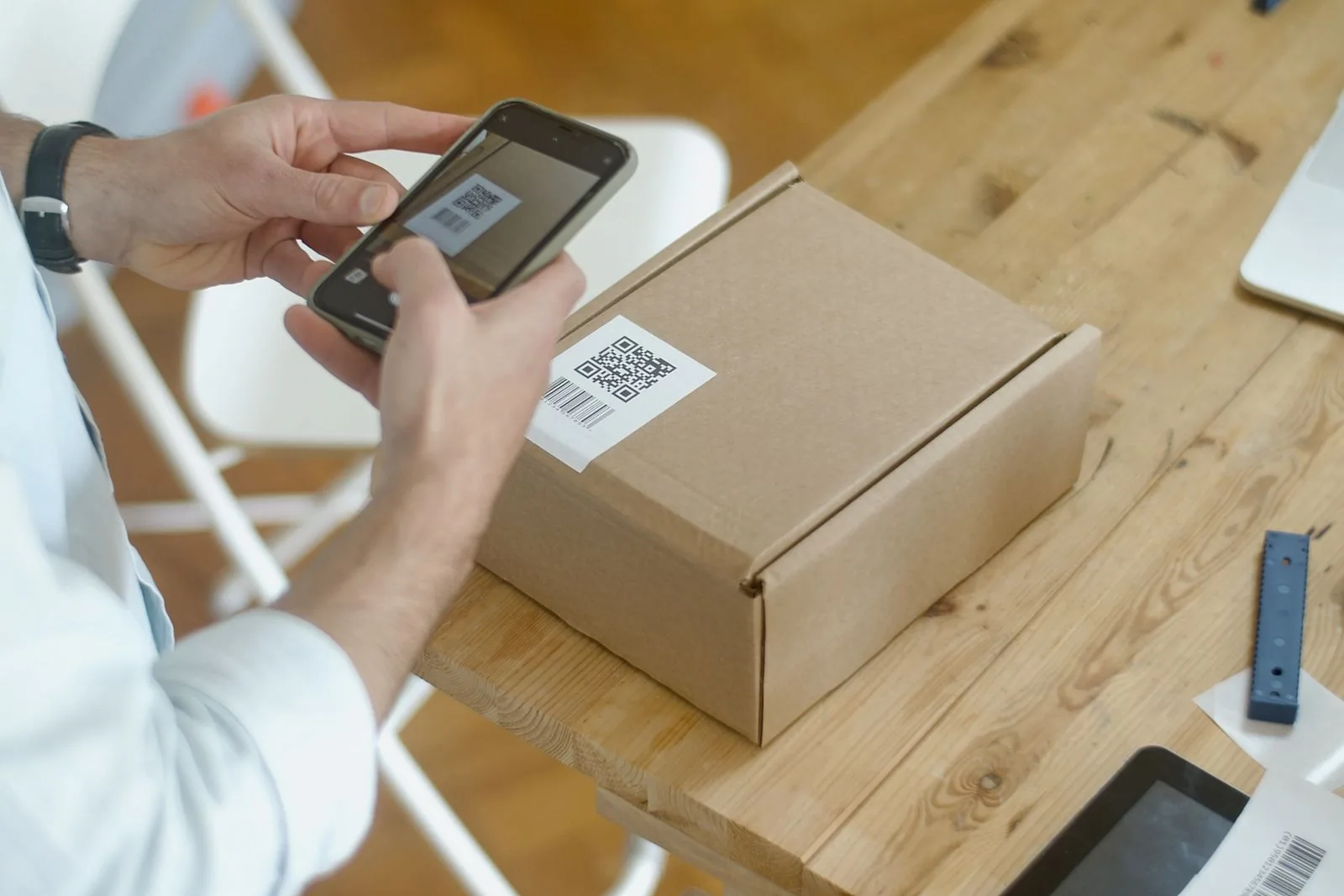
An exhibition lead capture system lets stand staff record a visitor in a few seconds — by scanning the organiser's badge, a QR code or a business card — then attach qualification answers, a voice or text note and an interest level. Leads are de-duplicated, scored, routed to the right salesperson and pushed to the CRM in near real time, so follow-up starts during the show rather than after it.
The measure of a lead capture system is not how many badges were scanned. It is how many qualified conversations reached a named salesperson before the show closed.
- Capture in under 10 seconds, mid-conversation
- Works offline; syncs when the hall network returns
- Routed to the right rep by product, territory or language
- Same-day CRM sync, not a post-show spreadsheet

Why exhibition leads go cold
The bottleneck is the eight seconds a rep has while still talking. Any capture method that takes longer than the pause in a conversation gets skipped, so the rep collects a business card instead and writes nothing down. By the evening the card has no context, and by the following week the rep cannot remember which of forty cards was the one worth calling.
The second problem is arrival time. Organiser lead data is often delivered days or weeks after close, as a file. It is then de-duplicated by hand, split by territory in a spreadsheet, and loaded into the CRM by someone in marketing — at which point the visitor has spoken to three competitors who called on the Tuesday. The third problem is that nobody can answer what the stand was worth, because the only number available is scan count, and scan count says nothing about qualification.
- Capture that takes longer than a pause in conversation simply does not happen.
- A badge scan with no qualification is a name, not a lead.
- Hall Wi-Fi is congested; a tool that needs connectivity fails at the busiest hour.
- Leads that arrive after the show arrive after the competitor's phone call.
- Scan count cannot answer what the stand was worth.
Solution overview
Swedish Technology deploys capture on the devices stand staff already carry. A visitor's organiser badge, a QR pass or a business card is captured in a few seconds; where the organiser's badge data is not available to exhibitors, the app falls back to card OCR and to a short manual form, so the rep is never blocked. Everything works offline and syncs when the network returns, because hall Wi-Fi at 11:00 on day one is congested by definition.
Qualification is deliberately short — three to five questions configured for that show, answered as taps rather than typing, plus a voice note the rep dictates while walking back to the stand. That is what turns a name into a lead. The system then de-duplicates against the CRM, scores the lead against the agreed criteria, routes it to a named salesperson by product, territory or language, and pushes it while the show is still open.
How the solution works
- 1Configure the show Qualification questions, scoring rules, routing by product, territory or language, and the CRM mapping are set before the show — this is the work that makes capture fast on the day.
- 2Capture The rep scans the organiser badge or QR, photographs a card, or types a name. Target is under ten seconds so it fits inside a natural pause.
- 3Qualify Three to five tap-answer questions plus an optional voice note, recorded immediately while the conversation is still in the rep's head.
- 4Enrich and de-duplicate Card OCR is parsed, the record is matched against existing CRM contacts and against other scans on the same stand, so one visitor does not become three leads.
- 5Score and route The lead is scored against the agreed criteria and assigned to a named salesperson, who is notified on their own device during the show.
- 6Sync and follow up The lead posts to the CRM in near real time with show, stand and rep attribution, and can trigger a follow-up sequence the same day.
Key capabilities

Reference architecture
Offline-first is the defining constraint. Everything a rep needs is on the device; the network is treated as intermittent rather than assumed.
Deployment options: Cloud lead service with offline-capable mobile clients. Where an exhibitor requires data residency, the lead service can be deployed inside their own tenancy or on-premise for the duration of the show.
Hardware options
Usually none beyond what stand staff already carry. Dedicated devices are specified only where volume or glove use makes a phone impractical.
| Device | Where it is used | Selection notes |
|---|---|---|
| Stand staff smartphone or tablet | Carried by every rep on the stand | The default. Camera quality is adequate for badge QR and card OCR; the limiting factor is battery, so power banks are part of the kit. |
| Dedicated rugged scanner | High-volume stands and busy entrances | Faster and more comfortable for continuous scanning over several hours, with all-day battery and physical scan trigger. |
| Tablet on a stand | A self-service capture point on the stand | Lets a visitor register their own interest when no rep is free — useful at peak, and a way to catch the visitors who would otherwise walk away. |
| Badge or card printer | Only where the exhibitor issues their own credential | Rare for exhibitors; relevant for hosted-buyer programmes or private events run on the stand. |
Swedish Technology supplies and integrates equipment from established manufacturers where dedicated hardware is required; most deployments use the exhibitor's existing devices.
AI capabilities
AI is used to reduce what the rep has to type and to catch the duplicates a person would miss.
- Business card OCR — Parses name, company, role, phone and email from a photographed card, including Arabic-Latin bilingual cards, with low-confidence fields flagged rather than silently guessed.
- Voice note transcription — Transcribes a rep's spoken note in Arabic or English and extracts the useful parts — product mentioned, timeline, budget signal — into structured fields.
- Identity resolution — Matches a new capture against existing CRM contacts and against other scans on the same stand, so one visitor seen by three reps becomes one lead with three notes.
- Lead scoring — Scores against the agreed criteria and historical conversion patterns, so the follow-up queue is ordered by likelihood rather than by scan time.
Integrations
This page's whole value is the hand-off. These integrations can be designed and built within project scope against documented APIs.
| System | Integration point & data exchanged | Direction |
|---|---|---|
| Salesforce / HubSpot / Dynamics 365 | Leads post in near real time with show, stand, rep and product attribution; existing contacts and accounts are read back so duplicates are merged rather than created. | bi-directional |
| Organiser registration platform | Where the organiser exposes exhibitor lead retrieval, badge scans resolve to the visitor's registration record so the rep does not re-key details already collected. → Exhibition & Event Visitor Management System | inbound |
| Marketing automation | Qualified, opted-in leads can enter a follow-up sequence the same day, segmented by the qualification answers captured on the stand. | outbound |
| Interactive activation | A visitor's game play or photo activation can attach to their lead record, so engagement and conversation are one history. → AI Interactive Games for Exhibitions | inbound |
| Microsoft Teams / email | In-show notification to the assigned salesperson, so a hot lead is acted on during the show rather than after it. | outbound |
| Power BI | Lead, qualification and conversion data exposed so exhibition spend is measured next to the rest of the marketing mix. | outbound |
The integrations above are designed and implemented within project scope using vendor APIs, webhooks or standard connectors. They do not imply partnership, certification or endorsement by the system owner unless stated on that vendor's official pages.
Dashboards & analytics
- Live stand — Leads captured per hour, by rep and by product interest, with qualification completeness so a rep skipping questions is visible during the show.
- Lead quality — Score distribution, qualification answers, duplicate rate and the proportion of captures with a note attached.
- Follow-up status — Leads synced, assigned, contacted and awaiting action — the view that shows whether the show is being worked.
- ROI pack — Cost per lead and per qualified lead against stand cost, pipeline created and conversion over the following quarters.
Security & deployment
Lead data on a device is encrypted at rest and scoped to that show, and a device can be remotely wiped — stand staff are frequently temporary hires, and a phone leaving with a visitor list is the most common data incident at an exhibition. Access is role-based: a rep sees their own captures, a stand manager sees the stand, and only nominated administrators export. At show close, device access expires automatically rather than relying on someone remembering to revoke it.
Data privacy
An exhibitor receiving visitor contact details becomes a controller of that data in its own right. The chain has to be clean: the visitor agreed at registration that a badge scan shares their details with the scanning exhibitor, and the capture screen re-states this so the visitor can decline at the stand. Where the lead comes from a business card rather than a badge, the card was handed over voluntarily, which is a different and narrower basis — it supports follow-up about the conversation, not addition to a general marketing list without a separate opt-in.
Under UAE Federal Decree-Law No. 45 of 2021 the exhibitor is accountable for what it does with the leads it collects. Retention, lawful basis and the marketing opt-in are configured before the show, and the opt-in is carried into the CRM as a field rather than assumed by the fact of a scan.
Industry use cases
UAE & GCC considerations
Two regional realities shape the design. First, business cards remain in heavy use at UAE shows alongside digital badges, and many are bilingual with Arabic on one face and English on the other — so card OCR has to handle both scripts and know which face it is reading. Second, organiser badge data is not always available to exhibitors: some UAE organisers sell lead retrieval as a separate service with their own device, so the system is built to work with the organiser's data where it is offered and entirely without it where it is not.
Language also matters after the show. A visitor who spoke Arabic on the stand should not receive an English-only follow-up, so language preference is captured at the scan and carried into the CRM and the follow-up sequence as a routing field rather than a note.
Implementation approach
- 1Qualification design Three to five questions agreed with sales, not marketing — what a rep actually needs to know to decide whether to call on Tuesday.
- 2CRM mapping and routing Field mapping, de-duplication rules, scoring criteria and assignment by product, territory or language, built and tested in a sandbox.
- 3Organiser data check Confirming early whether the organiser exposes badge data to exhibitors, since that decides whether badge scanning or card OCR is the primary path.
- 4Pilot at a smaller show Run at a lower-stakes event first: this is where question sets get shortened, because reps reveal what they will actually complete.
- 5Team briefing Twenty minutes with the stand team, focused on the capture habit rather than the software — the commonest failure is a trained rep who reverts to collecting cards.
- 6Show run and review Live monitoring of capture rate and qualification completeness during the show, then the ROI pack and a review of which questions predicted conversion.
Why Swedish Technology
- We design for the eight-second pause in a conversation, because a tool slower than that is not used regardless of its features.
- Offline-first, because hall Wi-Fi at the busiest hour is congested by definition.
- The lead reaches a named salesperson during the show, not marketing after it.
- Arabic and English card OCR and language capture, so follow-up matches the conversation.
- We report qualified leads and pipeline, not scan counts — the number that justifies the stand next year.
Limitations & prerequisites
- Badge scanning depends on the organiser exposing badge data to exhibitors. Where they do not, or where they sell it as a separate service, capture falls back to card OCR and manual entry.
- Card OCR accuracy varies with card design; heavily styled or low-contrast cards produce low-confidence fields, which are flagged for the rep rather than guessed.
- Lead scoring reflects the criteria and history it is given. A first show with no historical conversion data produces rules-based scoring only.
- Speed-to-follow-up is an organisational outcome, not a software one. A lead delivered in ninety seconds still goes cold if nobody is rostered to call during the show.
- Consent for a badge scan comes from the organiser's registration terms; where those terms are weak, the exhibitor's lawful basis is correspondingly weaker and should be reviewed.
FAQ
A tool that lets stand staff record a visitor in a few seconds — scanning the organiser's badge, a QR pass or a business card — then attach short qualification answers and a note. Leads are de-duplicated, scored, routed to a named salesperson and pushed to the CRM during the show rather than after it.
Yes. Some UAE organisers do not expose badge data to exhibitors, or sell lead retrieval separately. The system uses organiser data where it is available and falls back to business-card OCR and a short manual form where it is not, so the rep is never blocked.
Capture and qualification continue on the device with encrypted local storage, and everything reconciles when connectivity returns. This is a design assumption rather than a fallback — hall networks are congested at exactly the hour a stand is busiest.
Three to five, as taps rather than typing. Longer sets are completed for the first hour and abandoned after that, which produces a dataset that looks rich for day one and empty afterwards — worse than a short set completed consistently.
In near real time when the device is connected, and on reconnection otherwise. The point is that the assigned salesperson is notified during the show, because the competitor who calls on Tuesday beats the one who calls in three weeks.
Identity resolution matches each capture against existing CRM contacts and against other scans on the same stand, so a visitor spoken to by three reps becomes one lead with three notes and one owner.
Yes. Card OCR handles bilingual Arabic-Latin cards, voice notes are transcribed in Arabic or English, and the visitor's language preference is captured at the scan and carried into the CRM so follow-up matches the conversation.
Cost per qualified lead and pipeline created, not scan count. Because each lead carries show, stand, rep and product attribution into the CRM, conversion can be tracked over the following quarters and one show compared against another on the same basis.
Discuss your site with an engineer
Tell us the venue, the expected visitor volume and the systems you already run. We reply with a technical view, a realistic scope and the next sensible step — a site survey, a working demonstration, or a full technical and commercial proposal.
Sources & evidence
- UAE Federal Decree-Law No. 45 of 2021 — Personal Data Protection Law — Governs collection, retention and cross-border transfer of visitor personal data in the UAE.
- UFI — The Global Association of the Exhibition Industry — Industry body context for exhibitor performance measurement.
- Dubai World Trade Centre — exhibitor information — Venue context for exhibitor services, including lead retrieval provision.
Vendor and product names are trademarks of their respective owners; references are for technical context and do not imply partnership, certification or endorsement.