Smart City Solutions in the UAE
A smart city system connects what a municipality, master community or campus already has, including cameras, sensors, maps, assets and service requests, into one operational picture, so teams see problems early and respond with the right information. Swedish Technology designs and integrates these systems for UAE authorities, developers and operators.
Request Technical Workshop · Talk to an Engineer
What a smart city system brings together
| Layer | Examples | Page |
|---|---|---|
| Sensors (IoT) | air quality, noise, water levels, lighting, bins, parking | IoT solutions |
| Maps (GIS) | roads, utilities, buildings, assets and their condition | GIS solutions |
| Video analytics | crowding, incidents, traffic and safety events on CCTV | AI video analytics |
| Location | vehicles, field teams and equipment | RTLS |
| Digital twin | a live model of districts and buildings | Digital twin |
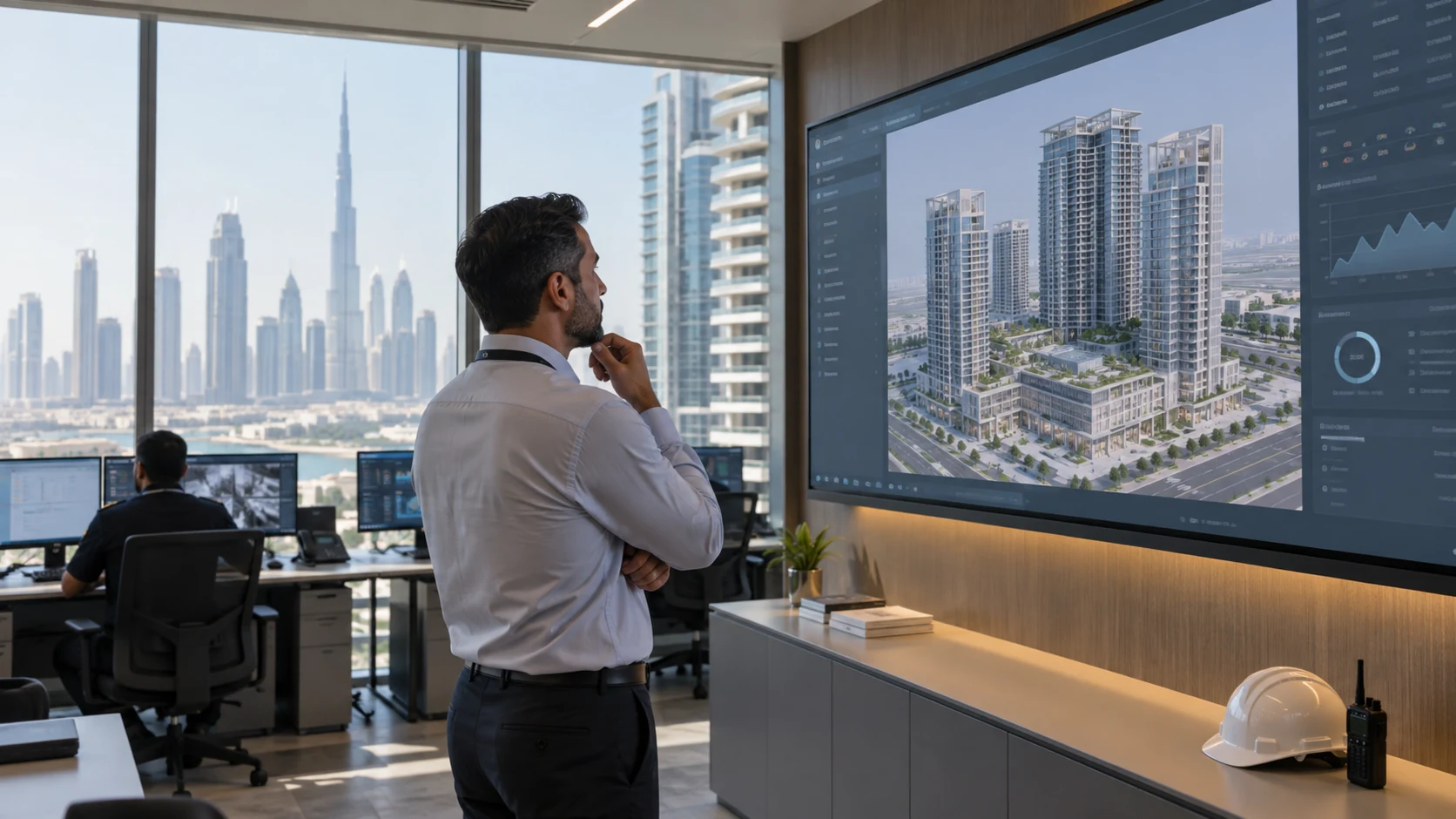
| Command dashboard | alerts, KPIs, incidents and work orders in one place | Smart city command dashboard |
Typical smart city use cases
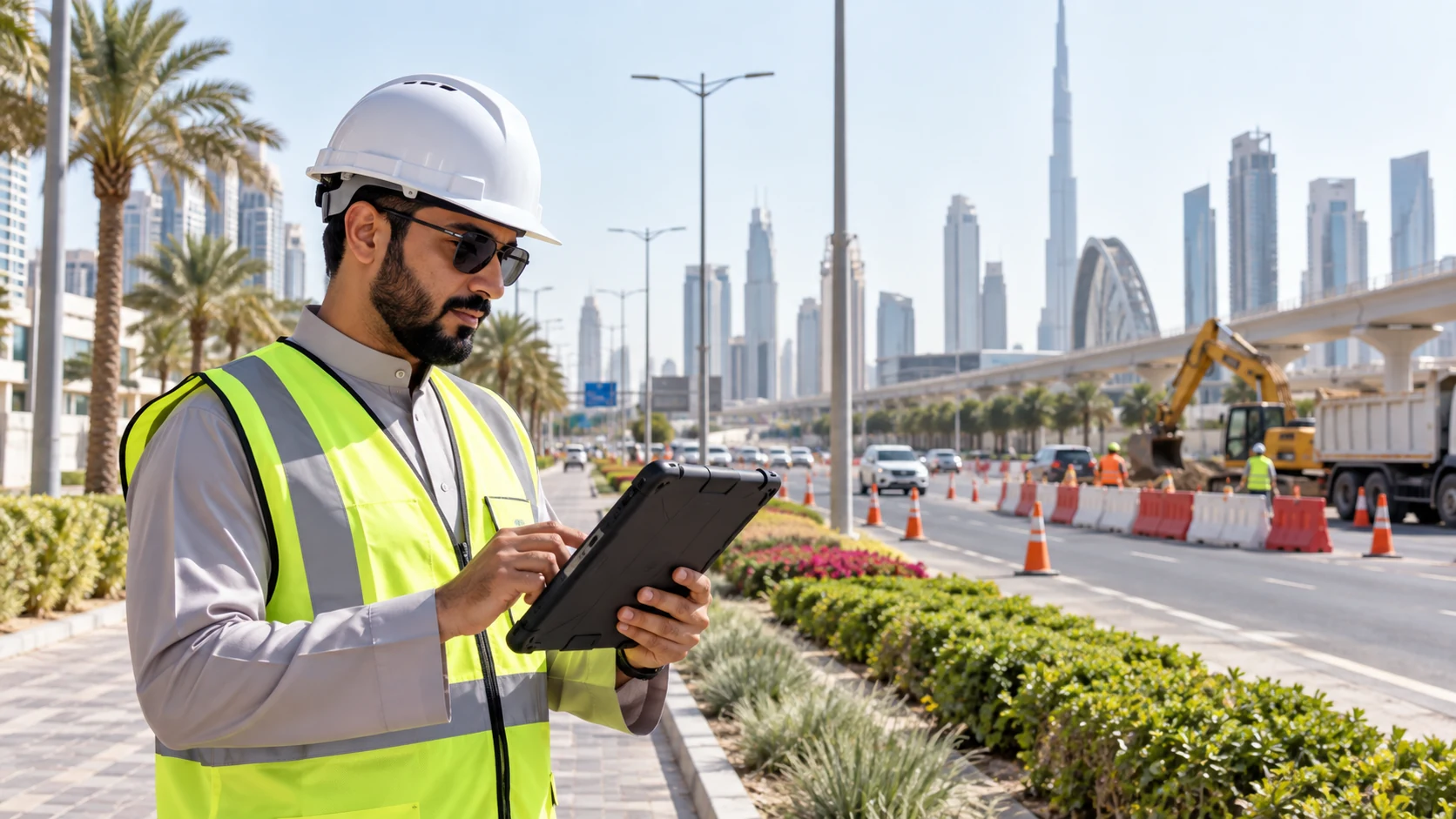
- Command and control: one screen for alarms from sensors, cameras and service channels, with the location on the map and the assigned team.
- Road and asset management: asset inventories, condition and maintenance planning; see road asset management GIS.
- Parking and mobility: occupancy, guidance and enforcement; see smart parking and residential smart parking.
- Community security: gates, visitors, cameras and patrols for master communities; see community security command center.
- Environment and utilities: air quality, water and energy monitoring with thresholds and reports.
Integration is the hard part
Most cities and communities already own many of these systems, from different vendors and installed at different times. The value comes from connecting them: common asset IDs, shared location data, and events that flow from a sensor or camera into a work order. We start by mapping what exists, then connect it through APIs and standard protocols rather than replacing working systems.
Data and security
Smart city data often includes video, locations and personal information. Systems are designed for UAE data-residency requirements, with role-based access, audit logs and retention rules, and can run on-premises in a government data centre.
How a smart city project runs
- Workshop: priorities, stakeholders and existing systems.
- Architecture: data model, integrations, security and hosting.
- Pilot: one district, community or use case.
- Scale: more sources, areas and users.
- Operate: monitoring, support and continuous improvement.
Questions buyers ask
Do we need to replace existing systems? Usually not. Integration of existing cameras, sensors and GIS is the normal starting point.
Can it run in a government data centre? Yes. Platforms can be deployed on-premises or in a sovereign facility.
What is a smart city command dashboard? A single operational view of alerts, KPIs and incidents from sensors, cameras and service channels, shown on a map with assigned actions.
Can we start with one district or community? Yes. A pilot in one area with defined success measures is the usual first step.
Book a site survey or demo, or contact our engineers.
Related: IoT solutions · GIS solutions · Digital twin · AI video analytics · Smart city & IoT knowledge hub
Solution scenarios
How this typically works for a specific kind of organisation. These are scenarios, not client case studies. See all solution scenarios.